The folder is called “Onboarding” and contains 40 PDFs. Work instructions, an org chart from last year, the travel expense policy, four decks with nearly identical content. Plus a buddy who already has a full calendar.
That is how induction starts in most companies. And because it obviously is not enough, an onboarding video series sits on a lot of L&D roadmaps. It usually stays there, because nobody finds the time to produce it.
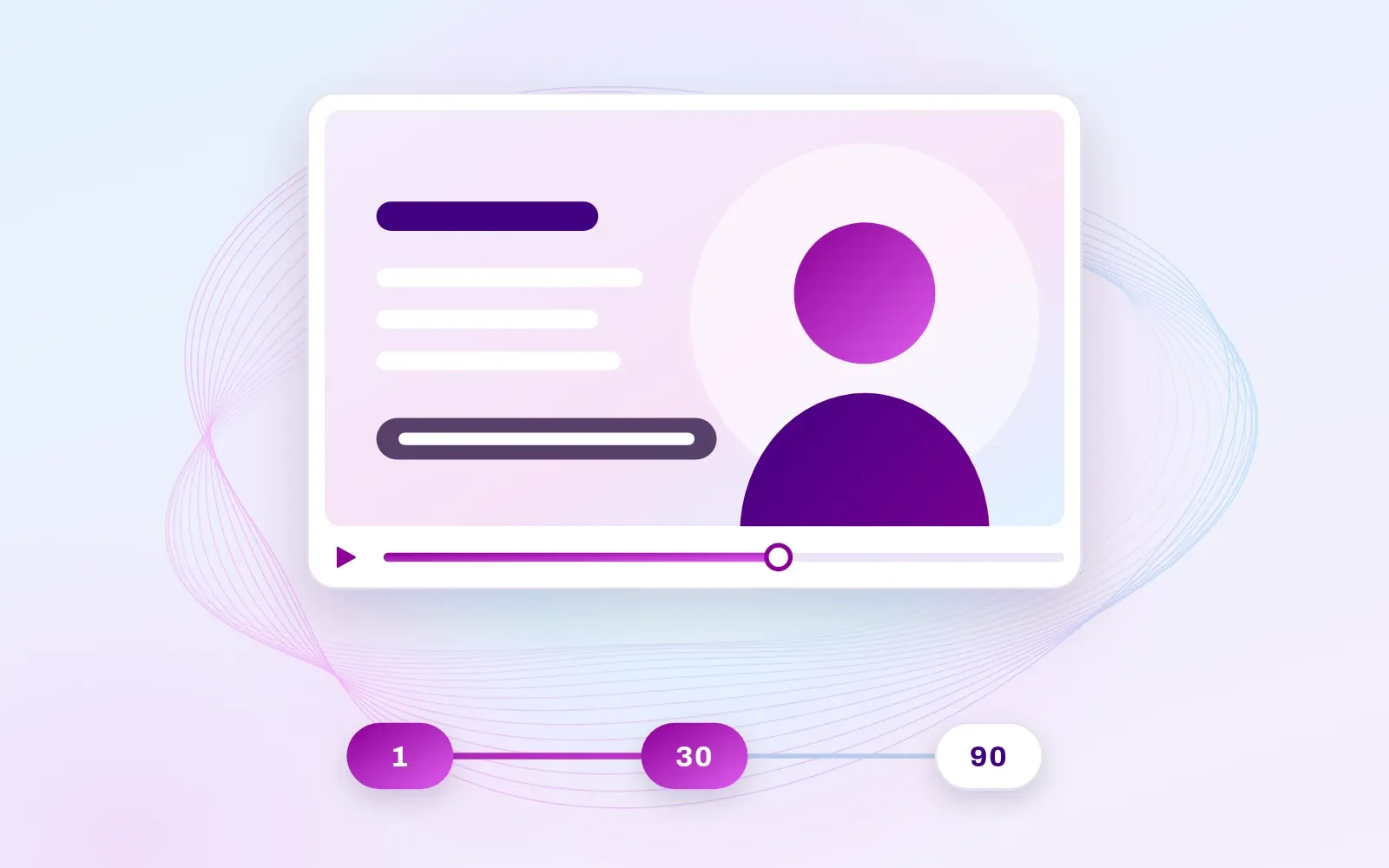
Before you go into production, it is worth looking at the sequence. What actually happens in the first 90 days, and where does video genuinely help?
Day 1: nobody reads the folder
On the first day a new joiner receives more information than a person can absorb. Access credentials, names, the safety briefing, the canteen, a first team meeting with 14 unfamiliar faces and three acronyms per sentence.
In that situation the PDF folder does not get worked through. It gets skimmed and closed.
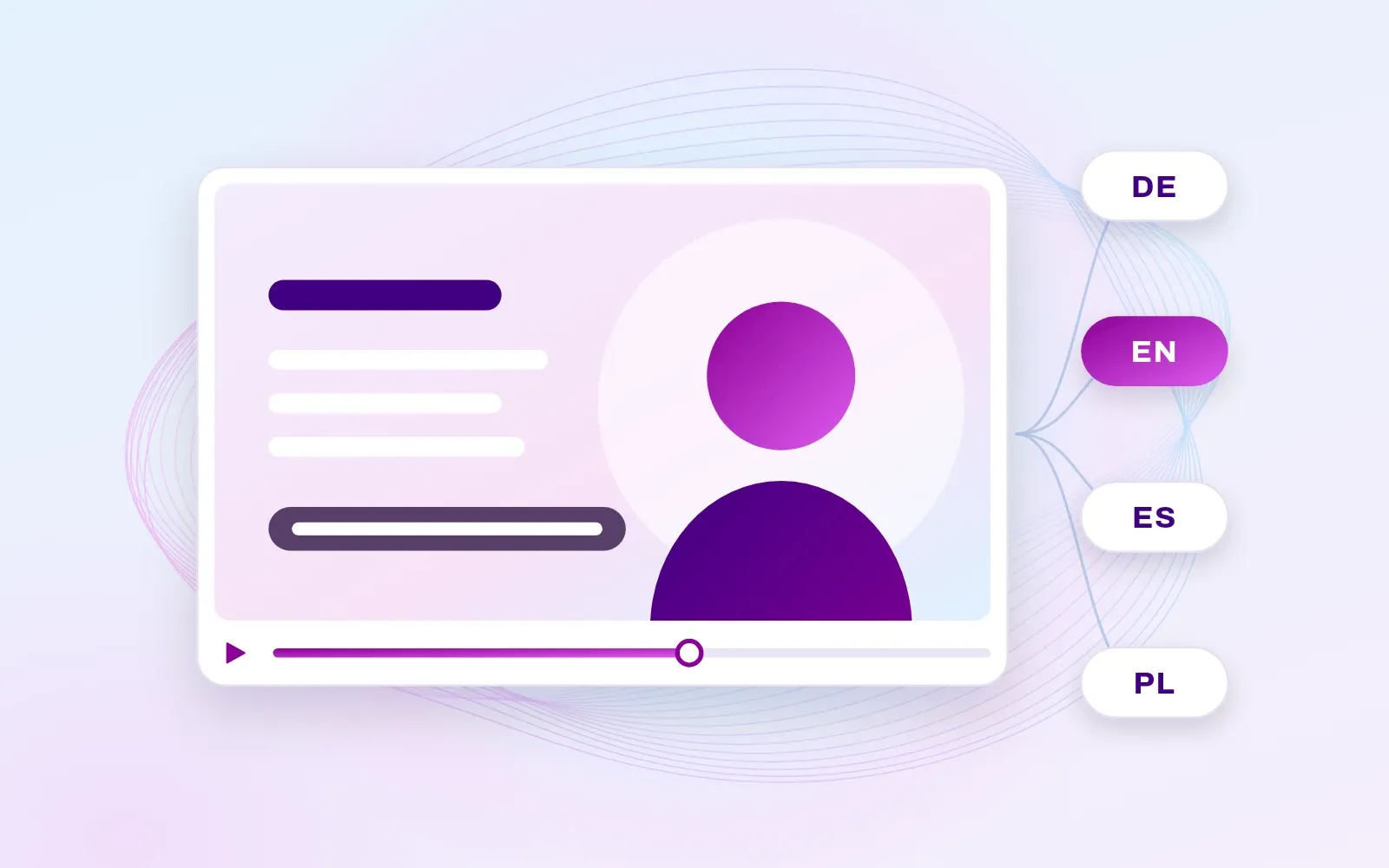
What does work here is remarkably plain: short videos showing what things look like. Where you are on the site, what the line looks like, how a shift handover runs. Not as learning material, but as orientation. For that first week video is the right format, because it shows spaces, sequences and faces that text can only name.
This is the easy part. It is produced in an afternoon, and it is rarely the reason induction fails.
Weeks 1 to 3: the questions start
From the second week the work begins, and with it the questions. At first they are harmless: which form, which contact, which system.
Those answers are in the folder. They get asked anyway, because searching takes longer than asking. Someone new would rather ask twice than spend an hour in a wiki.
A video series helps measurably at this stage, provided it is cut into two-minute pieces and provided people can find it. A 45-minute recording of the induction presentation does not help. It gets opened, abandoned after four minutes and never returned to. Completion rates on classic mandatory courses sit at 25 percent (Continu, 2025), and voluntary induction content does no better.
Up to this point onboarding is a content problem. Structure, short formats and a usable search will solve it.
Weeks 4 to 6: the standard series runs out
This is where it tips. The questions change in kind, and they do it all at once.
They are no longer about where the form is, but about what applies in this case. A customer wants terms the process does not provide for. A batch sits at the edge of tolerance, formally fine, and yet the experienced colleague would not release it. A supplier reports a two-week delay, and somebody in the building knows that this particular supplier habitually reports delays more pessimistically than they turn out. Cases like these decide whether an induction has worked after three months, and none of them appear in an onboarding series, because nobody thought of them while it was being built.
42 percent of job-related knowledge is documented nowhere (Panopto/McKinsey). That share is not spread evenly. Almost all of it sits in this category.
How you know you have reached that boundary:
- The new joiner stops asking the team and always asks the same person
- The answer begins with “it depends”
- Asked where that is written down, there is a pause
- Two colleagues give different answers, both of them confident
- Induction is formally complete and the questions keep coming
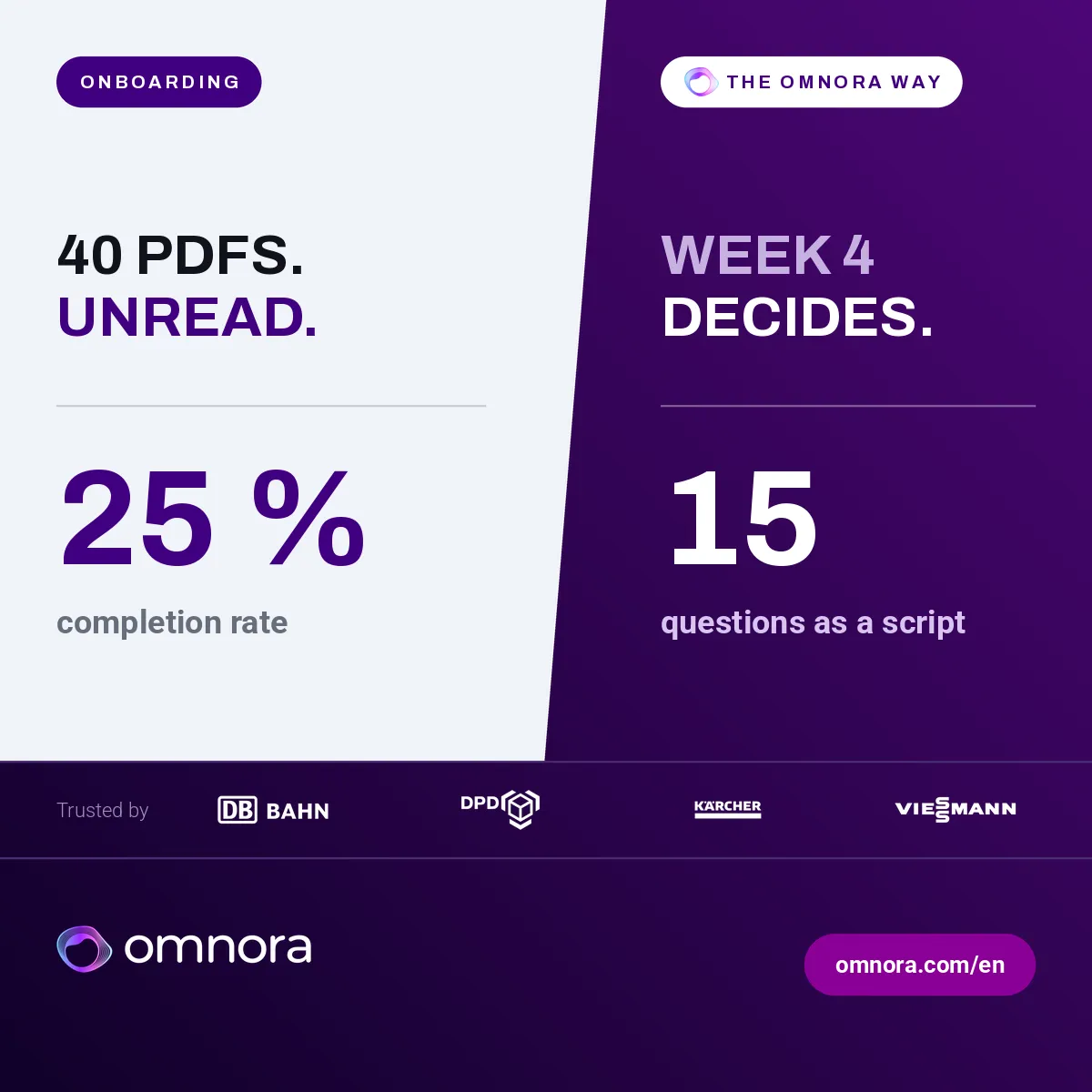
The same induction, two phases: until week three presentation decides the outcome, from week four capture does.
This is not a flaw in the onboarding concept. It is the point at which induction stops being a content topic and becomes a capture topic. How decision logic and exceptions can be drawn out of someone’s head at all is covered in the piece on AI expert interviews for knowledge capture.
Day 90: productive on paper
After three months the probation review comes due, and it is usually positive. The person is working, delivering, part of the team.
Two things are rarely settled at that point. First, a share of the questions continues, mostly to one experienced person who no longer perceives it as induction but as ordinary working life. Second, none of it has been written down. Whatever was transferred verbally over those 90 days will have to be transferred verbally again for the next new joiner.
That is the real cost, and it never gets calculated. Not producing the video series, but repeating the same conversations at every new hire.
Demographics sharpen the arithmetic. In Germany around 1.3 million people retire each year while only about 800,000 enter the labour market (IW Köln, 2026), leaving a shortfall of roughly 4.3 million workers by 2036. Comparable curves apply across much of Western Europe, and where they are flatter the same effect arrives through mobility instead of demography. If you can hire fewer people, the ones who do arrive have to become capable faster. And the experienced colleagues closing the gap verbally today are part of the same wave. The connection is set out in the piece on the retirement wave.
What video does not solve
A limitation belongs here, and it does not work in our favour.
A substantial part of successful induction is social rather than informational. Knowing who to call for which question. Sensing when a request is urgent and when it is merely polite. Daring to ask the same question a third time. There is no format for that, and it would be dishonest to pretend otherwise.
A well-built video series can even make that part harder. When the library looks complete, both sides start to assume the topic is covered. The new joiner asks less, expecting the answer to be somewhere in the videos. The team checks in less, because onboarding is running.
Three things catch this, and none of them is a tool:
- A named person who actively checks in at week 4 and week 10 rather than waiting
- A stated quota of questions that is explicitly welcome
- A rule that any question asked twice gets written down
The third matters most, because it produces the material for everything that follows.
How the series gets built without taking a year
The reason onboarding series stay on roadmaps is rarely a lack of conviction. It is the effort per video: script, sign-off with the subject area, recording, revision rounds. For external production the market benchmark runs up to €40,000 per finished hour of e-learning (market benchmark, Raccoon Gang, 2026), and internal production only moves the effort from the invoice into the calendar. The full structure behind that is in the piece on what a training video costs.
For the material from weeks 4 to 6 there is an additional difficulty: no document exists from which a script could be written. The knowledge is only available in conversation.
That is exactly where the other route starts. An AI-guided interview takes the conversation as the input instead of the script, follows up where a statement stays incomplete, and produces the training format from it. The time required from the experienced person is 30 minutes per interview. That is the figure that decides the matter in practice, because half an hour is something a shift supervisor will give you. Two days for a video production is not.
At a German primary insurer, the knowledge of more than 70 key people was captured this way over twelve months and turned into documentation, learning videos and queryable chats: over 55 hours of learning video and more than ten AI chats for knowledge transfer on demand. The case is anonymised; the order of magnitude is real.
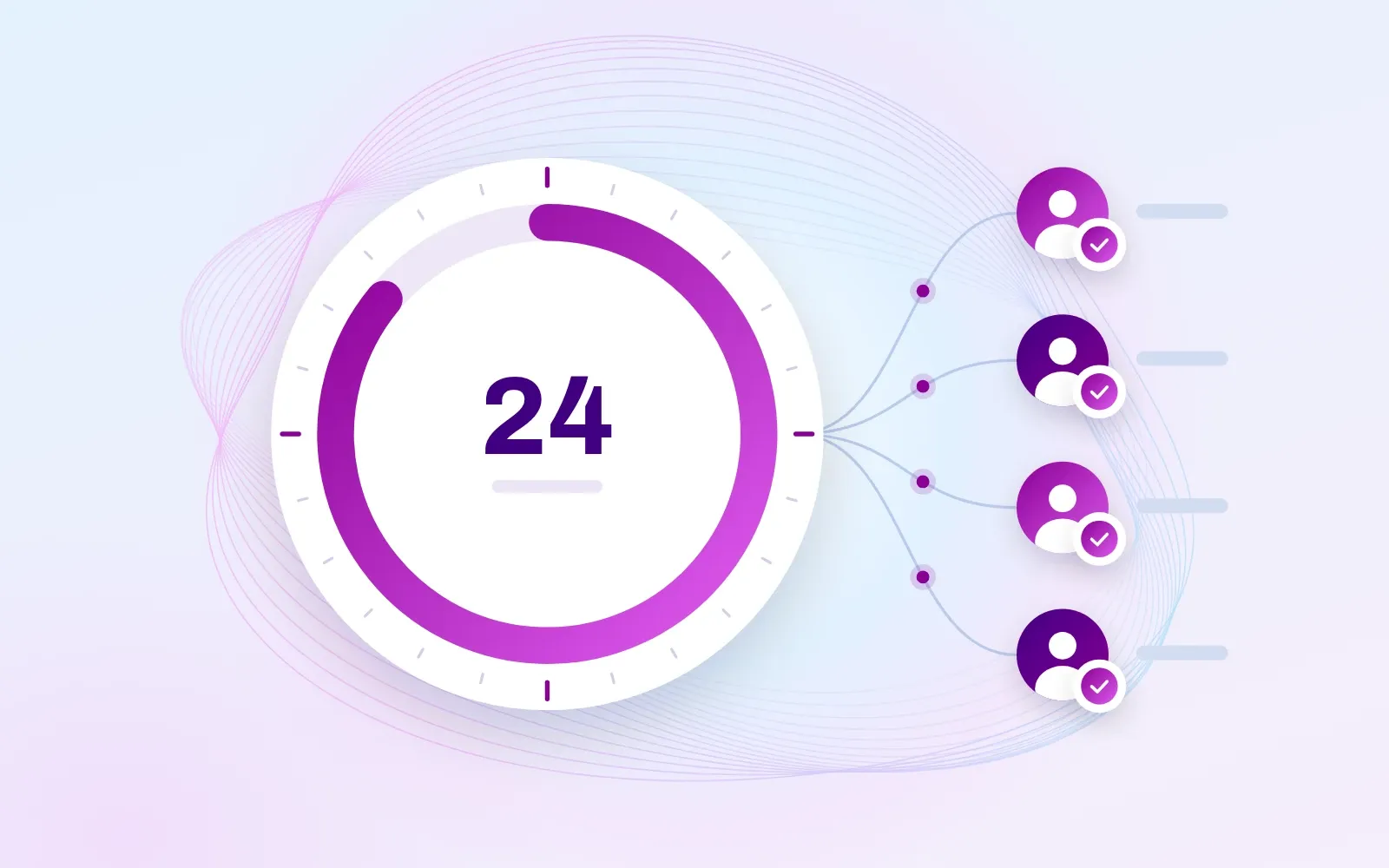
On the production side, expect typically up to 80 percent less production time per training hour compared with hand-built course production, and for a single mandatory training a time-to-market under 24 hours. Both are observations from Omnora projects, not commitments. How production works technically and which inputs it accepts is covered in creating learning videos with AI. If you then roll the series out across multiple sites, the mechanics are in scaling training production.
And now the step that is smaller than the roadmap item.
Ask your last three new joiners to write down five questions each that they asked in week four and that were answered with “it depends”. Not the week-one questions; those are in the folder. The week-four ones.
Those fifteen questions are not a result and not a metric. They are the script for the first three videos anyone will actually watch. And you need exactly half an hour from the person everything lands on anyway.