





The source-language course is finished. The Spanish colleagues have been waiting four months.
That is the normal case in internationally structured companies, and it has nothing to do with a lack of will. It follows from how translation is organised in classic training production: as a separate project, with its own budget, its own alignment and its own approval.
Why every language version gets so expensive
Translating a video does not mean translating a text in the classic chain. It means partly repeating the production.
The sequence usually looks like this: export the script, hand it to the translation agency, have the return reviewed by a specialist because terminology rarely lands correctly, book a new voice, record, adjust timing to the existing footage, set subtitles, change on-screen text inside the video, export again, import into the LMS, assign.
Ten steps per language. At five languages, fifty steps, and every single one can stall.
Cost therefore does not grow linearly. It grows faster than the number of languages, because coordination is added. Anyone who has consolidated returns from four countries at once knows the effect. In the cost breakdown for training videos, the language version is one of the two items that decide total cost.
The second, more expensive effect: version drift
Cost is only half the problem. The bigger risk is drift.
You change a work instruction. The source course is updated. The four language versions stay on the old state, because a new translation project would have to be triggered and the quarter's budget is already committed.
From that moment two truths exist inside the company. In regulated industries that is not merely untidy, it is an audit risk: the record documents a training whose content no longer applies.
How it runs differently
The approach is to treat language not as a production step but as an output format.
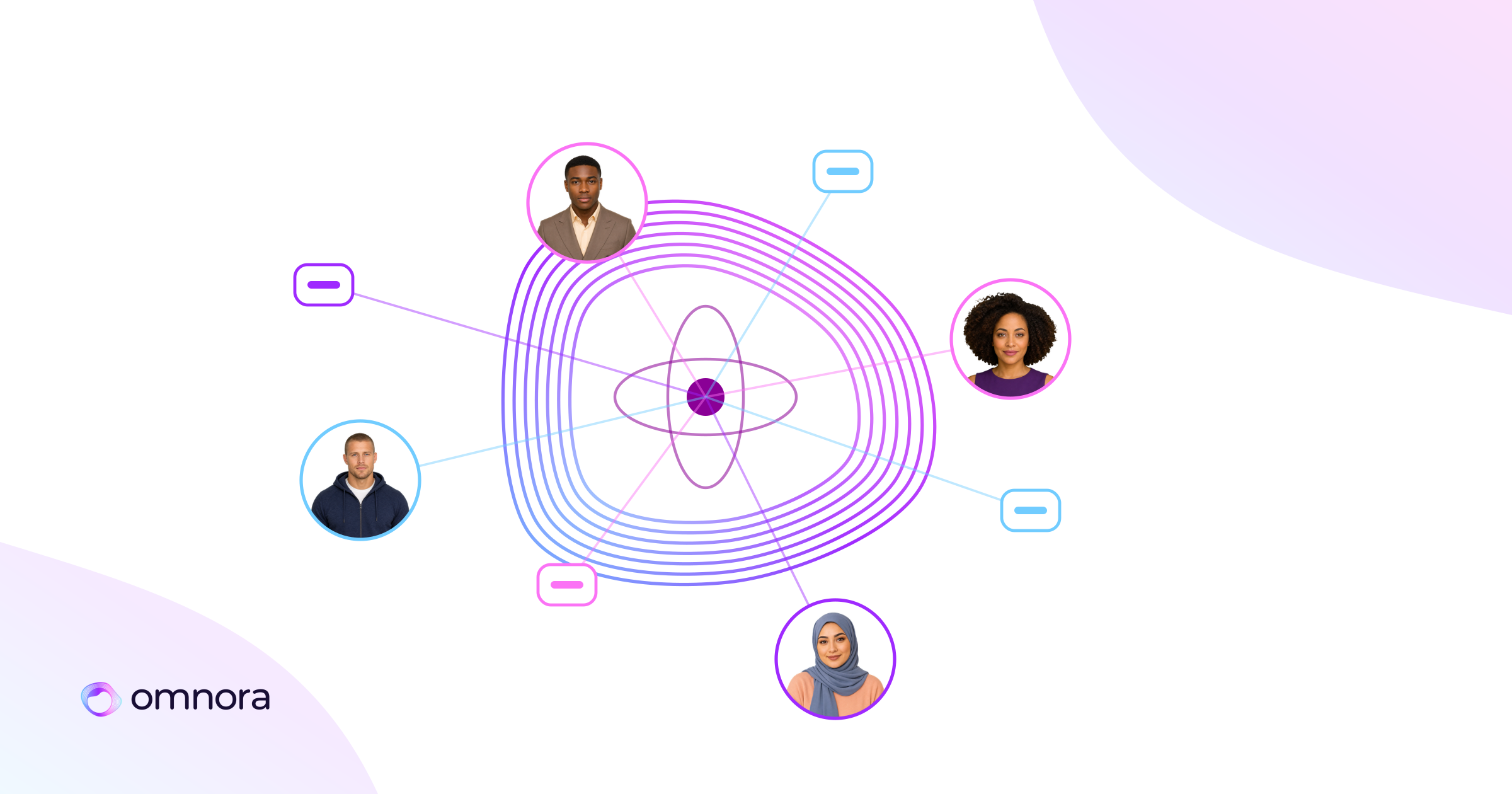
Concretely: 140 languages for subtitles and translation, 50+ languages for script and voiceover, 120+ avatars speaking the content in your corporate identity. The source stays one. Language versions emerge from it as an export, not as a new undertaking.
That shifts the planning logic too. You no longer decide which sites get a training this year. You roll out everywhere simultaneously, because the marginal cost of the fifth language is close to zero.
The same mechanism applies to updates. You change the source, all language versions follow, and through SCORM remote update the change takes effect without re-importing into the LMS. That prevents version drift structurally rather than through discipline.
What you still have to check
Automatic translation solves the volume problem. It does not solve the expertise problem. Three things still need a human.
1 Specialist terminology
Machine translation handles everyday language well and technical terms unreliably. Build a glossary for your 50 to 100 most important terms and have it reviewed once per language by a specialist. After that it is an asset for every future course.
2 Legally relevant wording
For occupational safety, data protection and compliance topics, requirements differ per country. A correct translation is not automatically a legally appropriate statement. These passages belong in local approval.
3 Cultural fit of examples
An example from one country's working day does not land the same everywhere. That is not a translation issue, it is an instructional one.
The effort for this is manageable when it is set up once as a review loop rather than improvised for every course. And it is a fraction of what a full re-production per language costs.
A practical example of the scale
Kärcher uses Omnora to train internal departments and external dealers worldwide. In a setup like that the point is not video quality, it is distribution capability: dealer training has to be current in many markets at once, otherwise part of the network sells on outdated information.
At DPD Germany the other side of the same mechanism shows domestically: more than 1,800 videos in two and a half years, production time per video down from about a working day to around an hour. Where production becomes cheap, completeness becomes realistic. The levers behind that are set out in the piece on scaling training production.
Frequent questions
Does this fully replace our translation agency?
For standard training content, usually yes. For legally sensitive passages and for marketing copy with high demands on tone, specialist review stays sensible. The difference: the agency then reviews instead of producing, and that costs a fraction.
How good is the synthetic voice really?
For explanatory content and safety briefings learners generally accept it, particularly when pace and emphasis are adjusted. For emotionally loaded topics such as leadership communication, a human voice still has the edge. How the avatar quality compares with pure video tools is covered in the piece on the Synthesia alternative.
What about text inside the image?
On-screen text has to be translated too, otherwise you get a mixed-language picture. During production, set text as a text element rather than baking it into graphics. That is the most common avoidable error in multilingual courses.
How do we keep 15 language versions in sync?
Through one source with derivatives rather than 15 independent courses. That is exactly the structural difference to classic production.
The entry point worth taking
Take an existing mandatory briefing that currently exists in one language only and produce three language versions. Measure two values: time to availability, and the number of specialist corrections per language.
The second number is the more interesting one. It tells you how much glossary work you need before going broad. And it is the basis for a credible statement to your international sites.