Any experiential knowledge

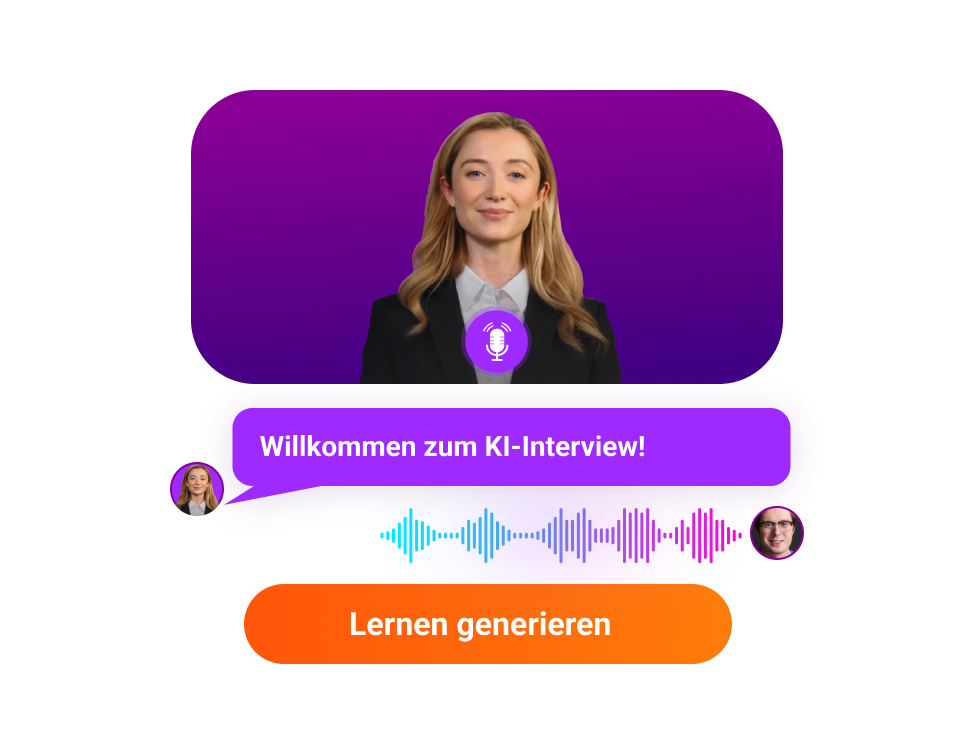
An AI interview. Secured in weeks

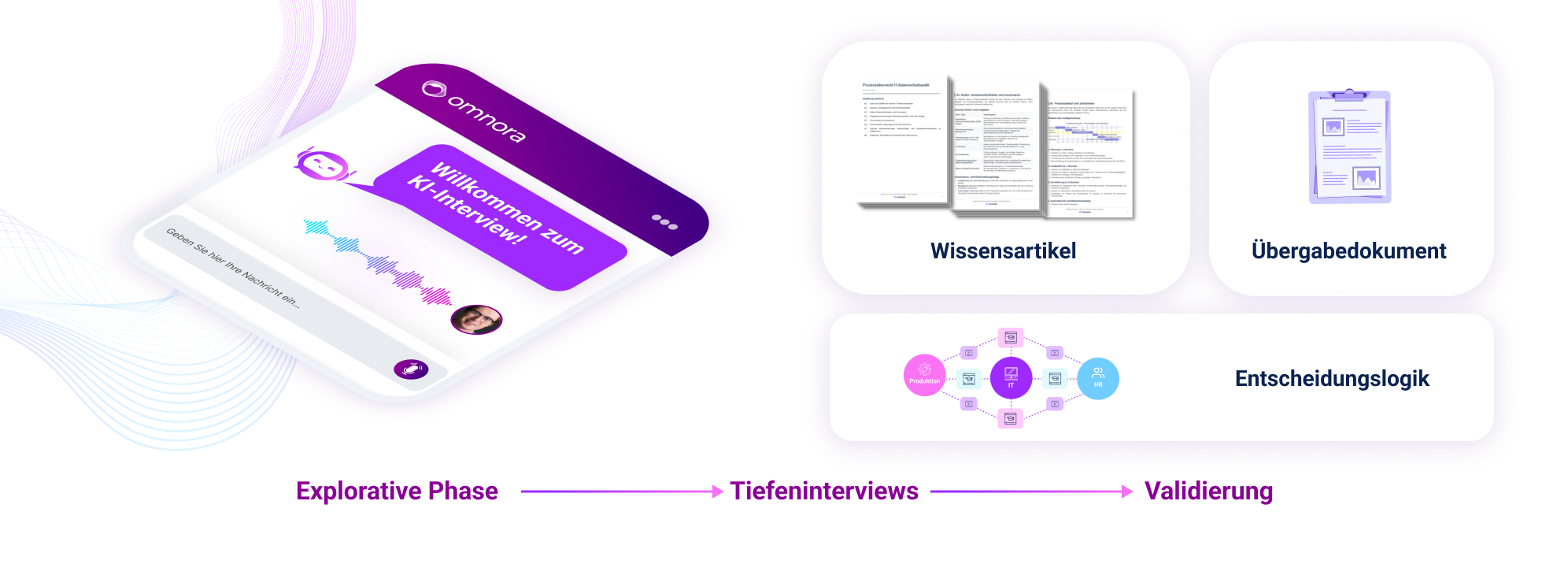
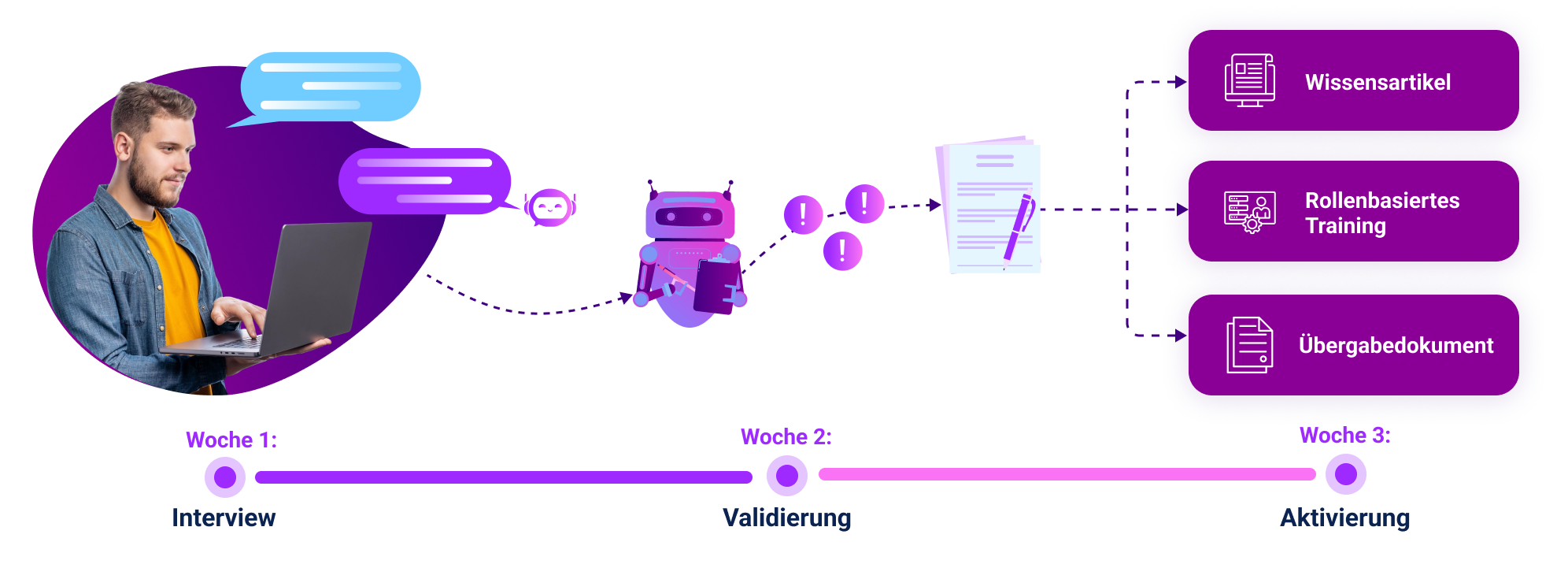
Whether it's retirement, offboarding or strategic knowledge transfer: Omnora conducts method-based AI expert interviews that also capture knowledge that is not included in any documentation. Decision logics, exceptions, warning signs. Can be used directly as a handover, knowledge article or training. Without documentation projects. No retyping.
42%
The knowledge of departing MAs is undocumented
(Panopto)
80%
Corporate knowledge exists only in people's minds.
(Panopto)
30%
the workforce in Germany, Austria, and Switzerland will be affected by 2036 (Demography Portal)
€72 Mio.
Annual knowledge loss at 30,000 employees
(Procedure Flow)
db company logo
db company logo

What our customers say:

Stephan Heyne

Head of HR Talent & Competence Management
"With Omnora, we have created more knowledge content in one year than in the last 10 years on the intranet."

Alois Gschrey

Personnel development
"We were looking for a streamlined solution to spread our information and Omnora met these requirements."

Shakya Udugama

Learning Expert
"If you have something to train, you can save a lot of time with Omnora"

Marius Leuchtner

Head of Recruiting and Personnel Development
"We used to need two to three takes per video and additional editing work. With Omnora's AI, I now can create a complete video from a PowerPoint presentation in just a few minutes."

Michael Pirke

Head of Academy
"We use Omnora for everything from managers to sales representatives, the HR department and our retail partners."

Magdalena Nolte

Senior Expert Learning Consulting
The Omnora AI makes our employees' work much easier

The problem isn't a lack of documentation. It's a lack of context.

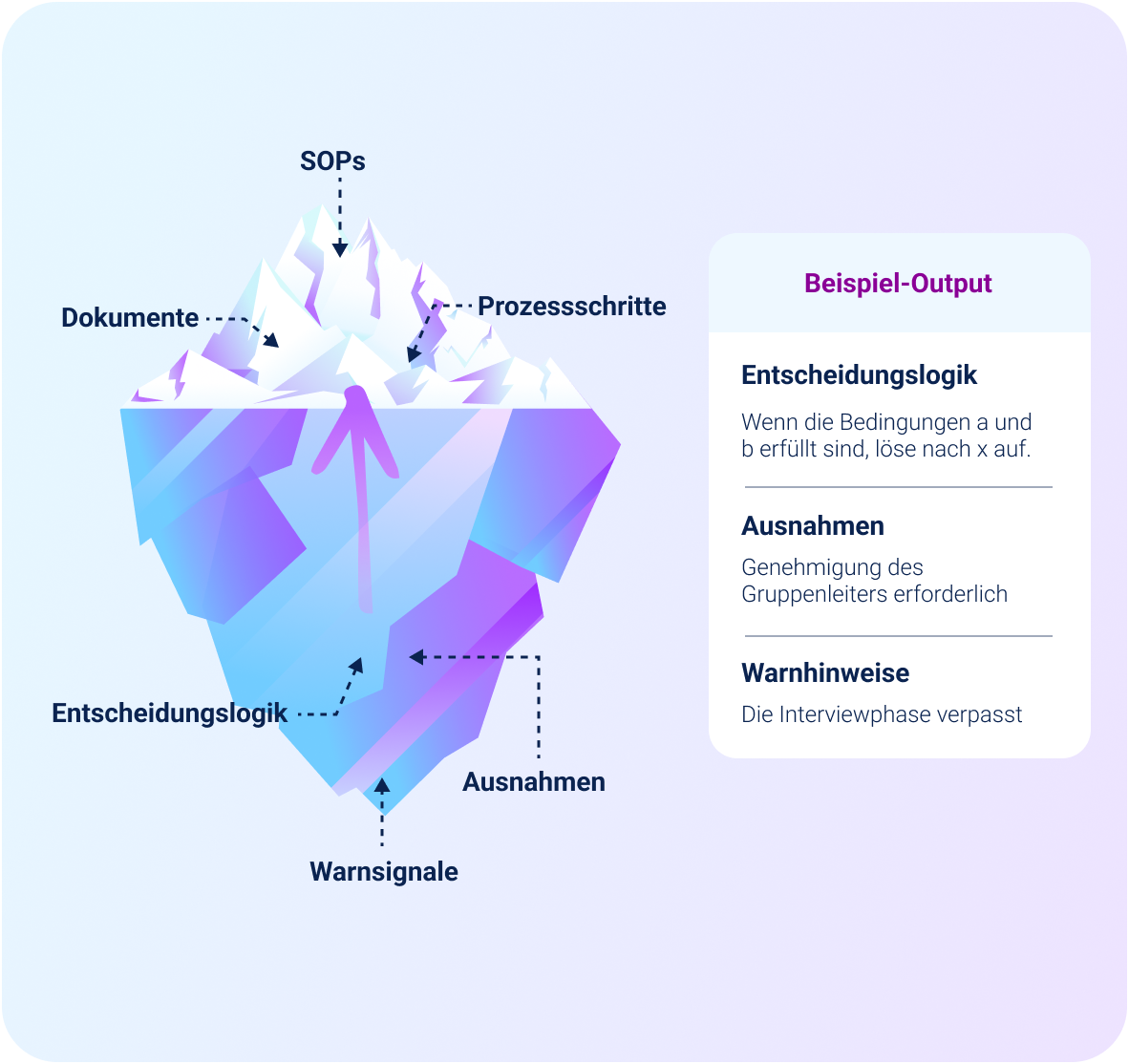
Most companies have files, wikis, and chats. Yet, the crucial element remains invisible: exceptions, lessons learned, and the knowledge of why something is truly done a certain way. Knowledge that isn't written into any standard operating procedure (SOP).
Retirement, resignation, reorganization. Each time, the organization loses context. Without a proper handover, new employees learn on the fly, which takes weeks and ties up precisely the people who should be delivering results. And when multiple versions are circulating, quality, security, and speed all suffer simultaneously.

The figures show just how big the gap really is:

80%

Job-related knowledge is not documented anywhere.
Panopto Workplace Knowledge Study

1,8%

Knowledge workers spend hours each day searching for information.
McKinsey Global Institute

50 to 200%

It costs one year's salary to replace a qualified professional.
SHRM/Gallup

only 21%

The companies have a formal succession plan.
SHRM
Automated knowledge management reverses this relationship. Not with another wiki, but with AI-powered expert interviews that extract experiential knowledge from your employees and transform it into formats that teams can actually use.

Expert Debriefing: Systematically extracting experiential knowledge

Their best people possess knowledge that isn't found in any manual. Decision-making processes that have proven successful over years. Exceptions that only they know about. Informal networks that keep the business running. The problem? Nobody asks them about it. Not systematically. Not in a timely manner. And then their last day of work arrives.
Automated knowledge management makes expert debriefings scalable. The AI ​​conducts method-based discussions: starting exploratory, delving into the details, and asking follow-up questions to identify gaps. Documents and media are incorporated as context, enabling the AI ​​to ask the right questions more quickly. Want to pause and resume later? Anytime. A debriefing that feels like a good conversation, not a documentation project.

What this means for your management:

Automated knowledge management reverses this relationship. Not with another wiki, but with AI-powered expert interviews that extract experiential knowledge from your employees and transform it into formats that teams can actually use.
42%
The job-related knowledge of departing employees is nowhere documented.
Panopto
Approx. 4
Weeks of transforming theoretical knowledge into usable team knowledge
Praxis Hörmann/BASF
Browser-based, no setup required: Share microphone and start

See how an AI expert interview works.

Or discuss your most urgent expert debriefing cases:

Offboarding:
Secure knowledge before the door closes.

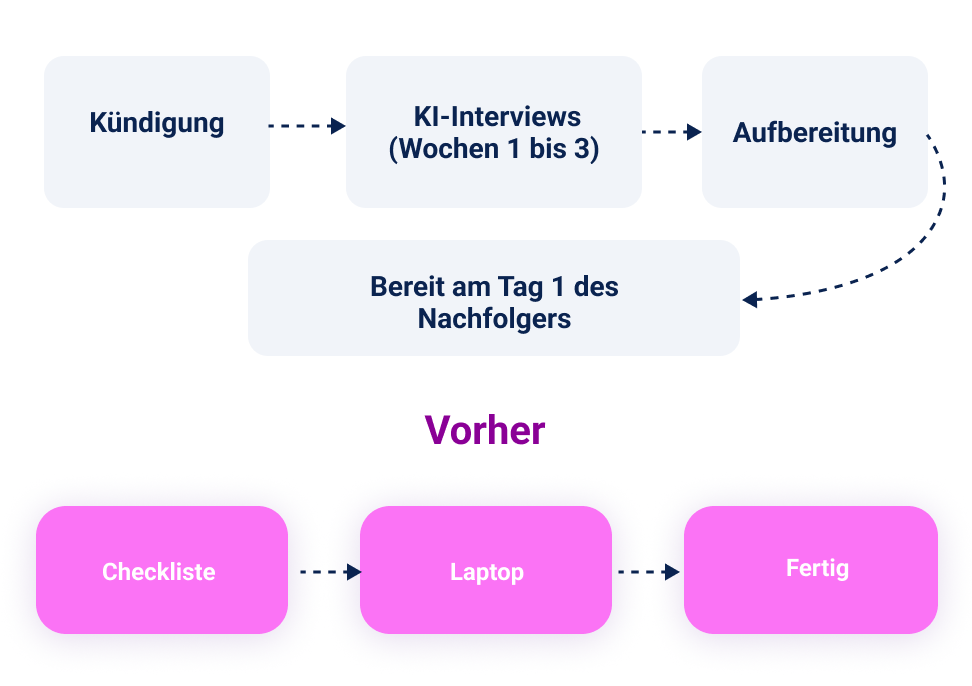
Resignation, last day of work, departure. In most companies, offboarding follows a checklist: laptop returned, access blocked, reference letter written. What's missing? The question: What knowledge does this person take with them that we'll need tomorrow? Traditional exit interviews capture the mood, not the substance.
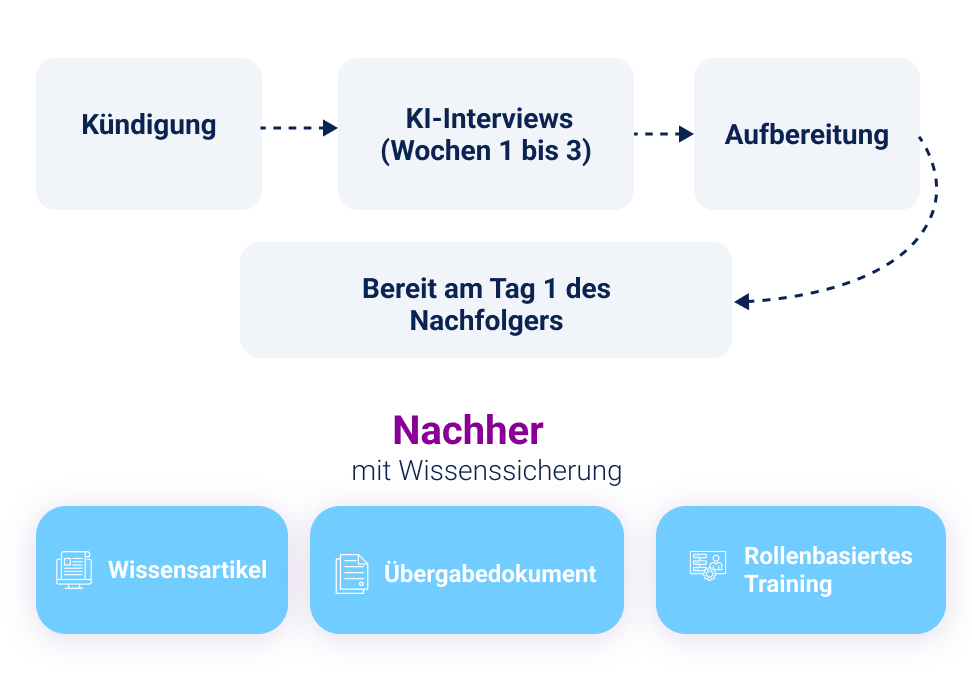
Automated knowledge management makes offboarding seamless. The AI ​​initiates expert interviews as soon as a departure is announced. The expert conducts the interviews at their own pace, pausing and resuming later. The result: structured knowledge readily available on the successor's first day. Not as a farewell document, but as a usable knowledge base.

What this means for your CHRO:

Offboarding is transformed from a risk factor into an opportunity. Instead of losing knowledge with every resignation, make it systematically available. AI-generated interviews start proactively, not just on the last day.
  • 56% of managers say: Knowledge loss makes onboarding more difficult (SHRM)
  • Retired experts return as consultants, at 2 to 3 times the daily rate (SHRM)
  • AI interviews start upon resignation, retirement, or role change

This is how offboarding with knowledge retention works

Which departures are you expecting in the next 12 months?

Securing action competence: The how, not just the what

When an expert leaves, the company loses more than just documents. It loses the ability to make decisions, identify errors early, and correctly assess exceptions. Only 21% of companies have a formal succession plan. And even those that do identify successors don't safeguard the predecessor's knowledge. That's the real gap.
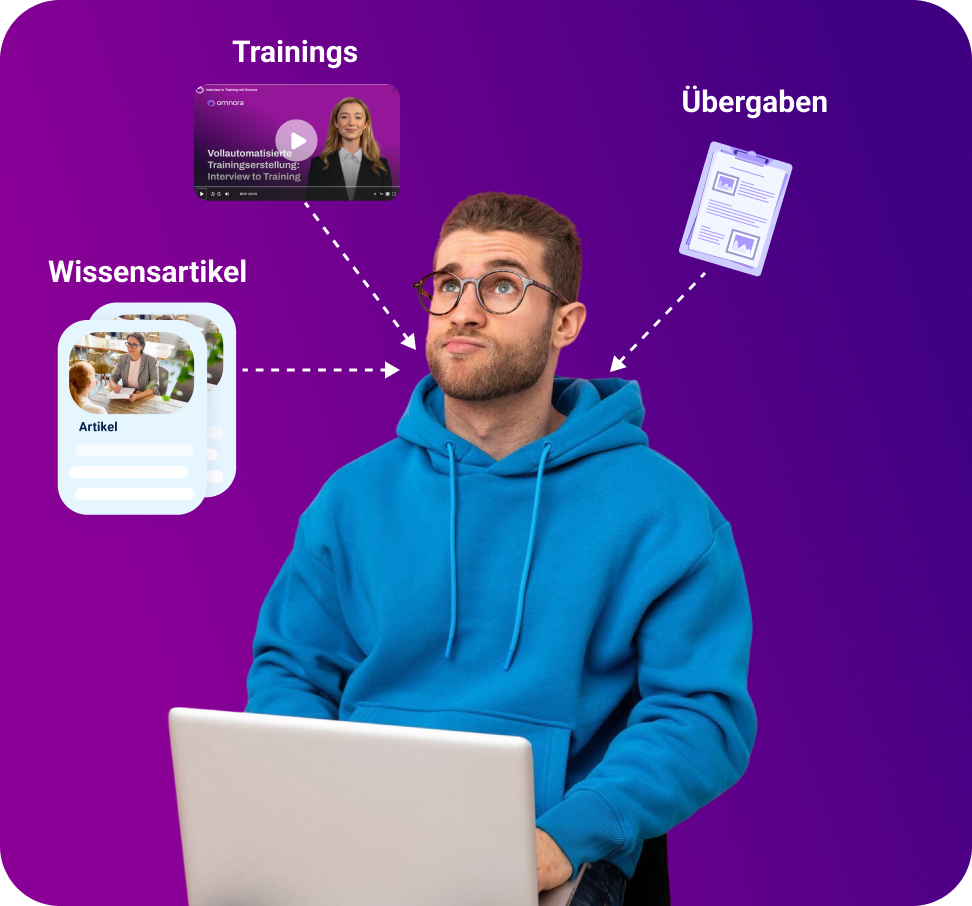
AI expert interviews capture not only what knowledge, but also how knowledge: decision-making heuristics, warning signals, and escalation paths. This experiential knowledge is used to create role-specific training, knowledge articles, and handover documents. Action competence becomes transferable. Successors don't start from scratch, but rather with the accumulated experience of their predecessor.

What this means for your Head of L&D:

Knowledge transfer transforms from an abstract goal into a concrete result. Role-specific content arises from genuine expert knowledge, not from generic training plans. With a shortage of 7 million workers expected by 2035, internal knowledge transfer becomes a matter of survival.

79%
companies without a formal succession plan
SHRM
15 to 30%
Shorter onboarding time through role-based knowledge
Omnora/Süwag
7 million
Labor shortage in Germany until 2035
IAB

Systematically transfer action skills

Or discuss your succession plan with us:

Securing implicit experiential knowledge: The why behind the what

Every organization possesses a layer of knowledge that doesn't appear in any database. The exceptions known only to the experienced service technician. The warning signs the project manager pays attention to. The decision-making logic that has proven itself over 15 years. This implicit knowledge makes the difference between a team that delivers and one that constantly improvises.
AI expert interviews go beyond process steps. The AI ​​asks the "why." What factors truly matter in a decision? What warning signs indicate potential problems? What isn't in any standard operating procedure (SOP) but is crucial to the outcome? The result: experiential knowledge becomes tangible, structured, and usable for others—as a knowledge article, training material, or handover document.

What this means for your knowledge management:

For the first time, the knowledge that truly matters is being captured: not the process steps that anyone can look up, but the experiential knowledge that makes the difference between good and excellent. And all this without any documentation requirements for the experts. A single conversation is all it takes.
  • 80% of a company's knowledge exists only in the minds of its employees (Panopto)
  • It captures decision-making heuristics, warning signals, exceptions, and informal networks.
  • Results can be used directly as knowledge articles, training materials, SOPs, or handover documents.

See how implicit knowledge becomes tangible.

Which experiential knowledge is most at risk in your company?

Break up head monopolies:
Transferring knowledge from the individual to the team

In every department, there are those one or two people on whom everything depends. If they get sick, operations grind to a halt. If they leave, they stop. Not because documents are missing, but because decision-making logics, exceptions, and informal networks are ingrained in their minds. The reaction of many companies? Bring back retired experts as consultants. At two to three times the daily rate.
Automated knowledge management proactively breaks down knowledge silos. AI interviews extract precisely the knowledge that makes individuals irreplaceable: decision-making logic, warning signals, and special cases. Before the knowledge is lost, it is secured in formats that the team can use from day one: knowledge articles, handovers, and training materials.

What this means for your management:

No more operational downtime when key personnel leave. No more costly recruitment efforts. Instead: structured, secure knowledge that remains within the company. Available to the entire team from day one.
  • 90% of respondents view retirement as a significant knowledge risk (ProcedureFlow/Deloitte)
  • 2 to 3 times higher daily rate for rehired Retired Experts (SHRM)
  • Approximately 4 weeks from theoretical knowledge to usable team knowledge (Hörmann/BASF practice)

How to make intellectual monopolies visible and solvable

Or let's identify your most critical roles:

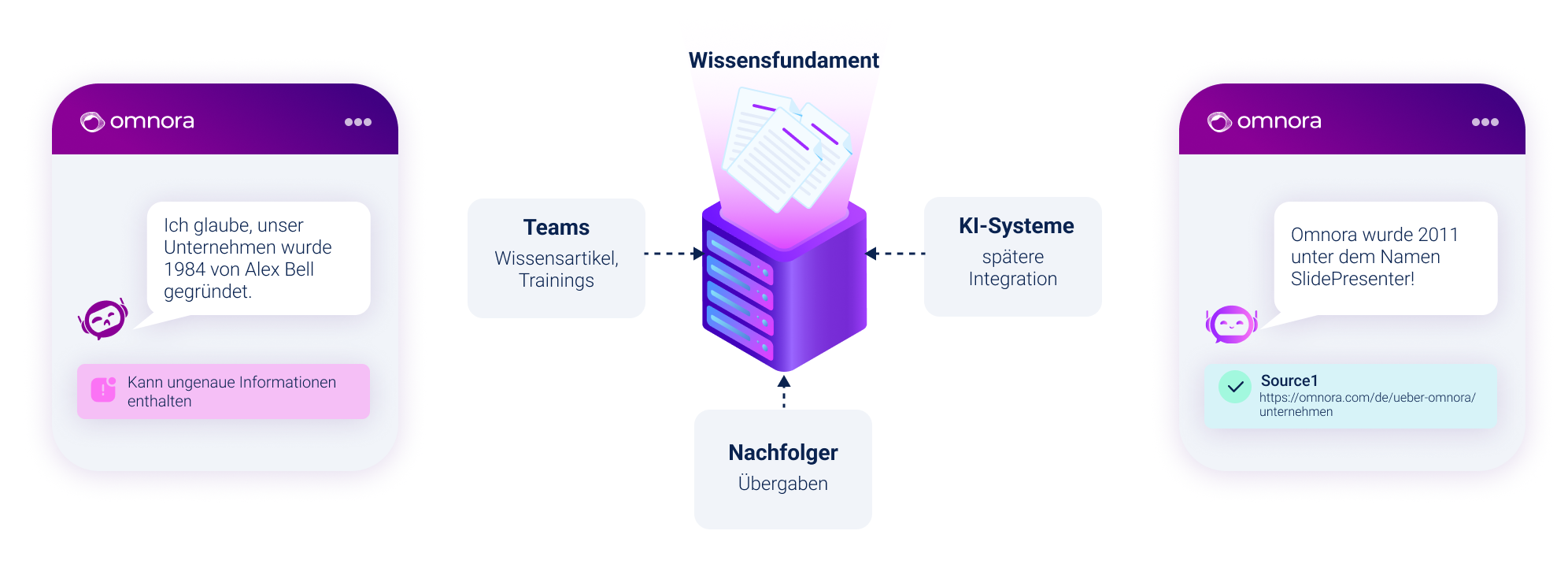
AI Enablement & Agent Enablement: The missing knowledge foundation for your AI

AI projects rarely fail because of the technology. They fail because of a lack of business context. Chatbots access generic material instead of validated company knowledge. At the same time, over 50% of employees use private chatbots for work. Uncontrolled. Without GDPR compliance. The result: AI hallucinations, loss of trust, and stagnant adoption.
Automated knowledge management provides the foundation your AI systems lack. AI interviews extract experiential knowledge from your experts. This generates structured, validated knowledge that can later serve as context for chatbots, co-pilots, and AI agents. EU-hosted, GDPR-compliant, no training data usage. The result: AI that can work with the realities of your business.

What this means for your CDO/CTO:

No more AI projects failing due to a lack of context. Instead: validated experiential knowledge as the foundation for every AI application. The controlled, EU-compliant alternative to the uncontrolled ChatGPT of your employees.
  • Over 50% of employees use private GenAI for work (Gartner Feb. 2026)
  • EU-hosted, GDPR compliant, TISAX certified, no use of training data
  • Established knowledge as a basis for later AI integration (chatbots, agents, copilots)

Reliable knowledge as the foundation of AI

Are you planning an AI strategy? Talk to us:

Dynamic corporate memory: Knowledge that stays alive

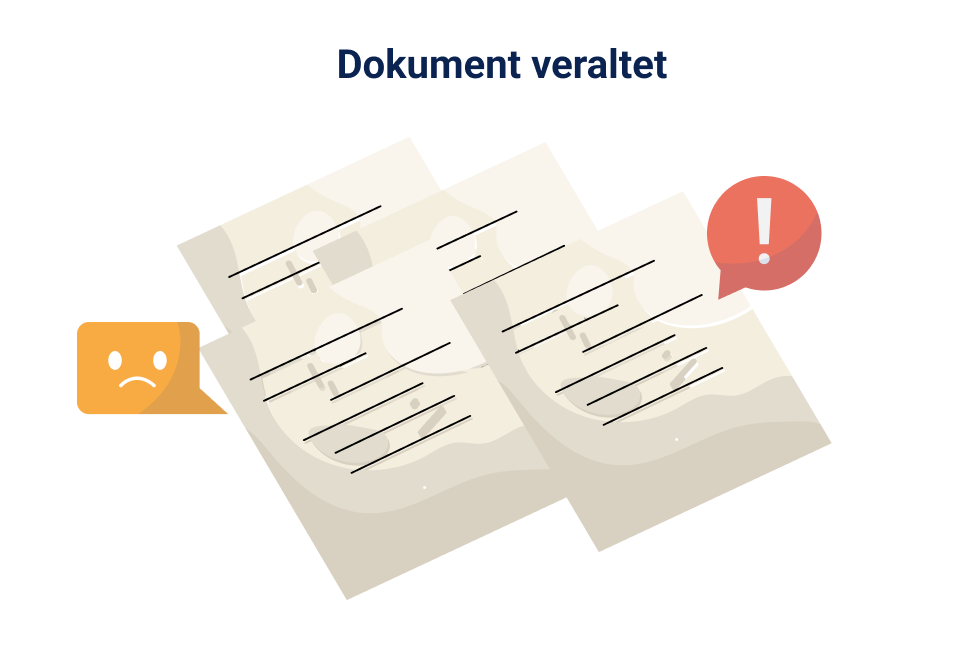
There are files, folders, wikis. But everyone still asks their colleagues. Because documentation doesn't equal usability. SharePoint pages become outdated, wikis turn into data dumps. 47% of employees can't find relevant information right away. What's missing: a system that keeps knowledge alive. Up-to-date, consistent, and easily discoverable.
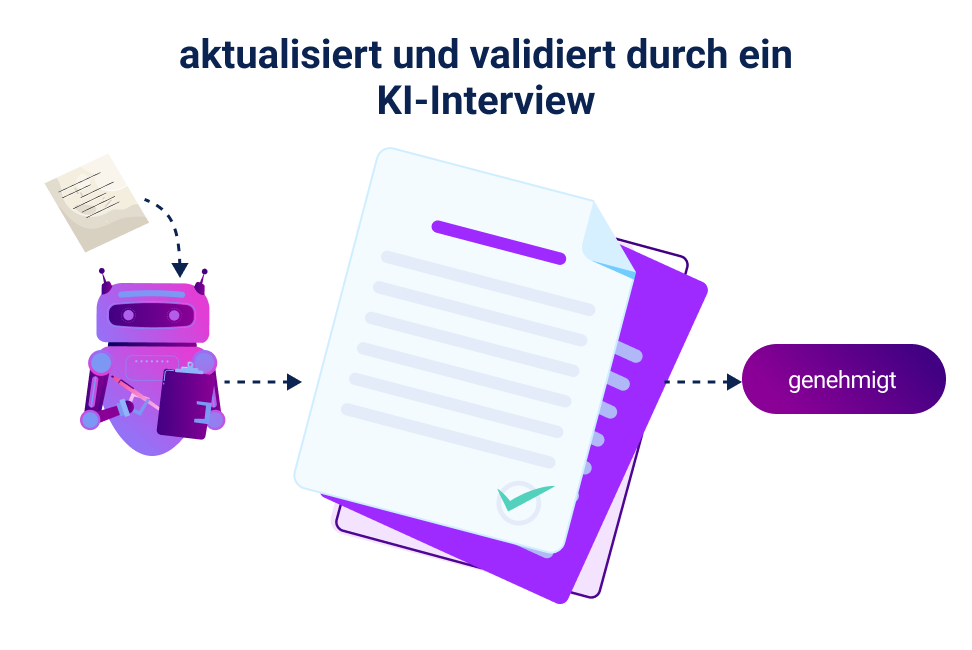
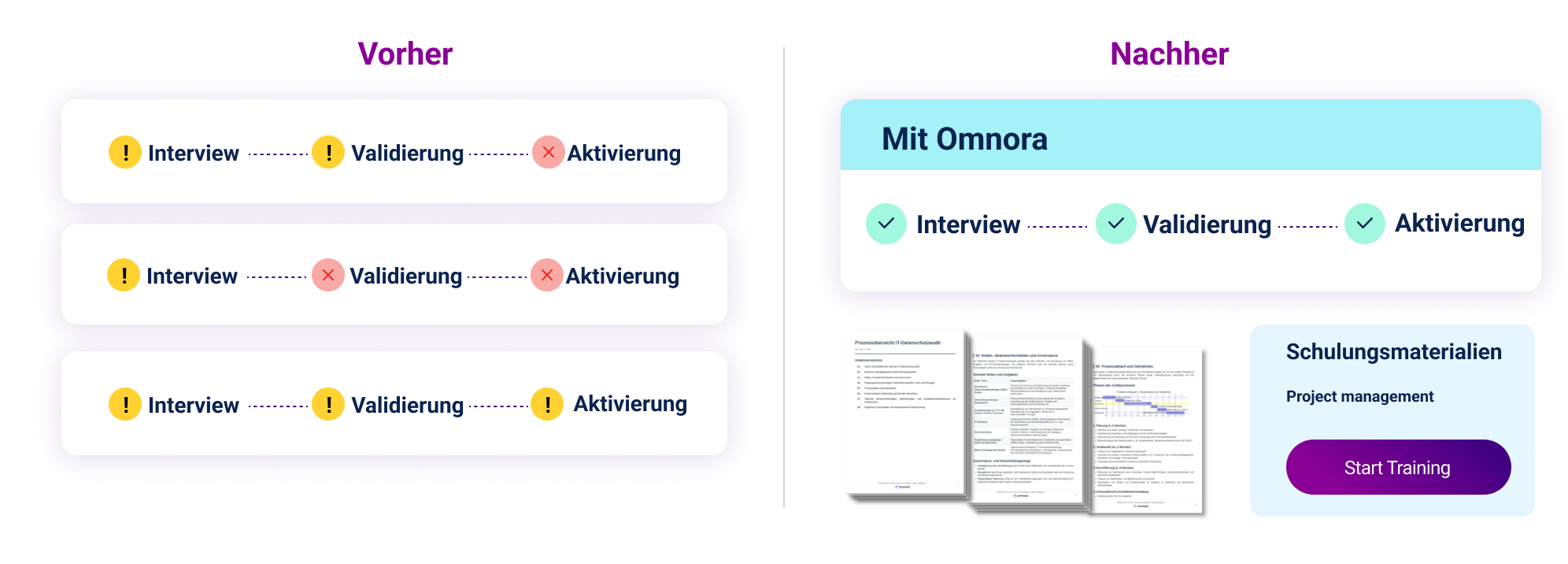
Automated knowledge management creates a self-sustaining memory. Interviews capture knowledge, and validation questions regularly check whether the content is still accurate. If Team A describes something differently than Team B, the AI ​​highlights the discrepancy. The result: a living knowledge base instead of a document repository, presented in formats that teams actually use.

What this means for your knowledge management:

No more fighting outdated wikis and conflicting versions. Instead: a knowledge base that keeps itself up-to-date through continuous AI interviews. Knowledge is finally found, not just stored.
  • Knowledge workers spend 1.8 hours per day searching for information (McKinsey)
  • 47% of employees cannot find relevant information immediately (Gartner Digital Workplace Survey)
  • Validation questions and contradiction detection keep knowledge up-to-date and consistent.

The difference between filing and memory

Which areas of knowledge are you most passionate about?

Process optimization:
Standards based on real experience

Processes rarely fail because of the flowchart. They fail because of everyday practice. In your company, processes are officially the same, but are executed differently from plant to plant. This creates rework, escalations, and quality problems. Why? The exceptions, handovers, and decision criteria aren't documented anywhere. They only exist in the minds of those who live the process daily.
KI-Interviews mit Prozessbeteiligten aus verschiedenen Teams und Standorten machen diese Muster sichtbar. Wo weichen Abläufe voneinander ab? Wo gibt es Warnsignale, die nur erfahrene Mitarbeitende kennen? Die Widerspruchserkennung findet Stellen, an denen Teams auseinanderdriften. Daraus entstehen konsistente Standards, Übergabedokumente und Trainings. Auf Basis von echtem Erfahrungswissen, nicht auf dem Flussdiagramm von 2019.

What this means for your operations management:

Less rework, fewer escalations, less "that's just how we do it." Instead: consistent standards based on real experience. Clearly documented and readily available as training.
10 to 25%
Less rework through consistent execution
Omnora Kundenprojekte
20 to 40%
Fewer questions for experts
Omnora Kundenprojekte
20 to 25%
Productivity increase through consistent standards
APQC

Where does inconsistency cost you the most?

Or see the objection detection in action:

Auto Qualification: Qualification based on genuine expert knowledge

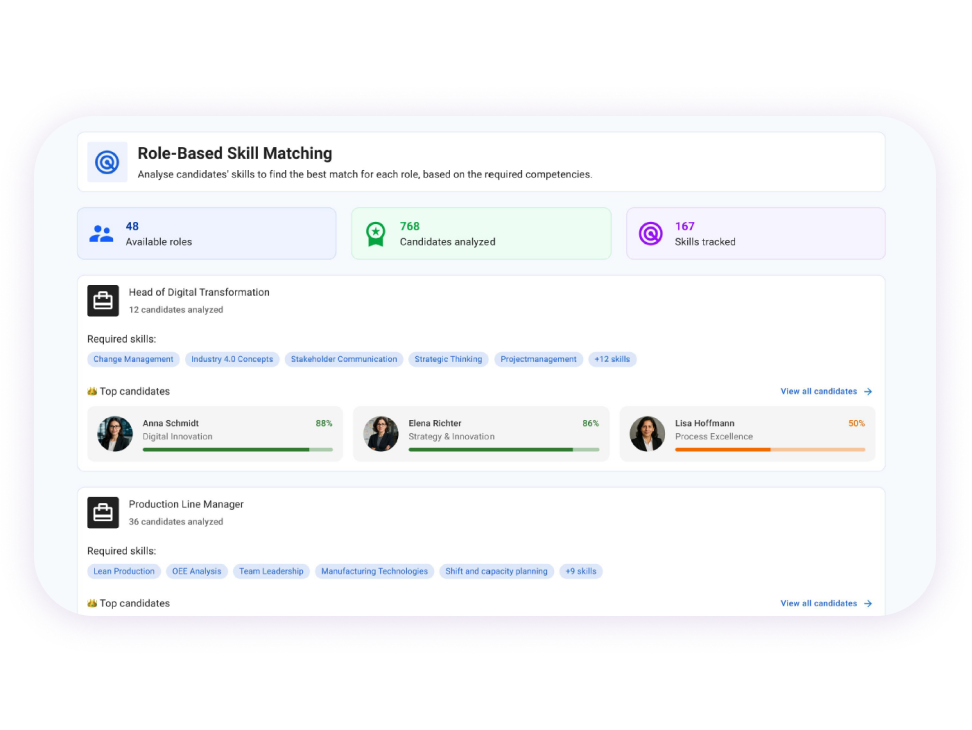
Training doesn't fail for lack of will, but for lack of perspective. L&D teams create training plans based on assumptions: What does someone need for this role? But reality changes faster than the training plan. New systems, modified processes, updated compliance requirements. Suddenly, the training needs are different than they were six months ago. And nobody notices in time.
Based on verified expert knowledge, training courses, knowledge articles, and qualification content can be created directly. The content is based on what experts described as truly relevant in AI interviews. No generic modules. Instead, role-specific qualifications that arise from genuine experiential knowledge and automatically evolve with each new interview.

What this means for your Head of L&D:

No more training plans based on assumptions. Instead: qualification content that comes directly from proven expert knowledge. Less manual needs assessment, more content that truly helps in everyday practice.
  • 80% faster training program production with Omnora (Omnora customers)
  • 140+ languages ​​for automated training and translations
  • 650+ companies use Omnora for knowledge and training production

Qualification based on real knowledge

What does your current qualification process look like?

Strategic AI Readiness: The knowledge foundation your AI strategy needs

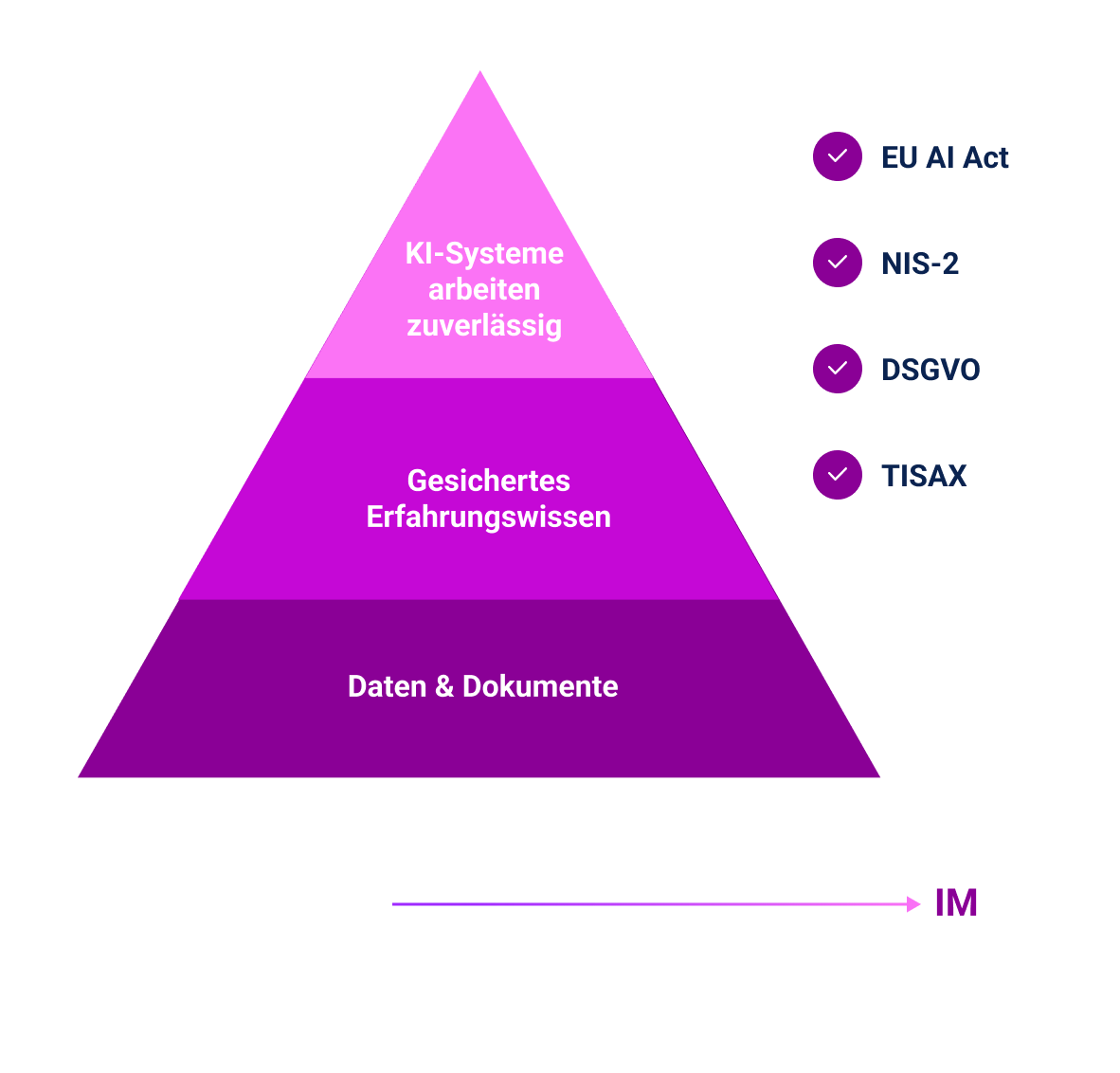
They're investing in AI. Copilot, chatbots, agents. But are you also investing in the foundation on which AI stands? Without validated, structured business knowledge, AI remains an expensive experiment. There are also increasing compliance requirements: The EU AI Act makes AI governance mandatory from August 2026. NIS-2 classifies AI systems as ICT systems with risk management obligations.
Automated knowledge assurance creates the basis that every AI strategy needs. Experiential knowledge secured via an AI interview becomes a structured, shared body of knowledge. EU-compliant, TISAX certified, no use of training data. The first step on the journey from “We have data” to “Our AI works with our real knowledge.” And if you're ready to integrate this knowledge into AI systems as well, intelligence management is the next logical step.

What this means for your management:

KI wird vom Risiko zum Wettbewerbsvorteil. Kein unkontrollierter Wildwuchs mehr. Stattdessen: ein solides Wissensfundament, auf dem Ihre KI-Strategie aufbauen kann. Audit-sicher, skalierbar, zukunftsfähig.
  • EU AI Act: HR-KI is considered a high-risk from August 2026 (EU regulation)
  • NIS-2: AI = ICT system with risk obligation since December 2025 (Haufe/Advisori)
  • TISAX certified, EU hosted, no US data transfer

Is your company AI-ready?

Or see automated knowledge assurance in action as an AI foundation:

Knowledge transfer: From secure knowledge to an empowered team

Securing knowledge is the first step. But secure knowledge that is stored in the file is of no use to anyone. The actual value only comes when knowledge arrives where it is needed: by the new employee on the first day. With the manager who has to make a decision. With a team that takes over a process. One format for everyone? It doesn't work.
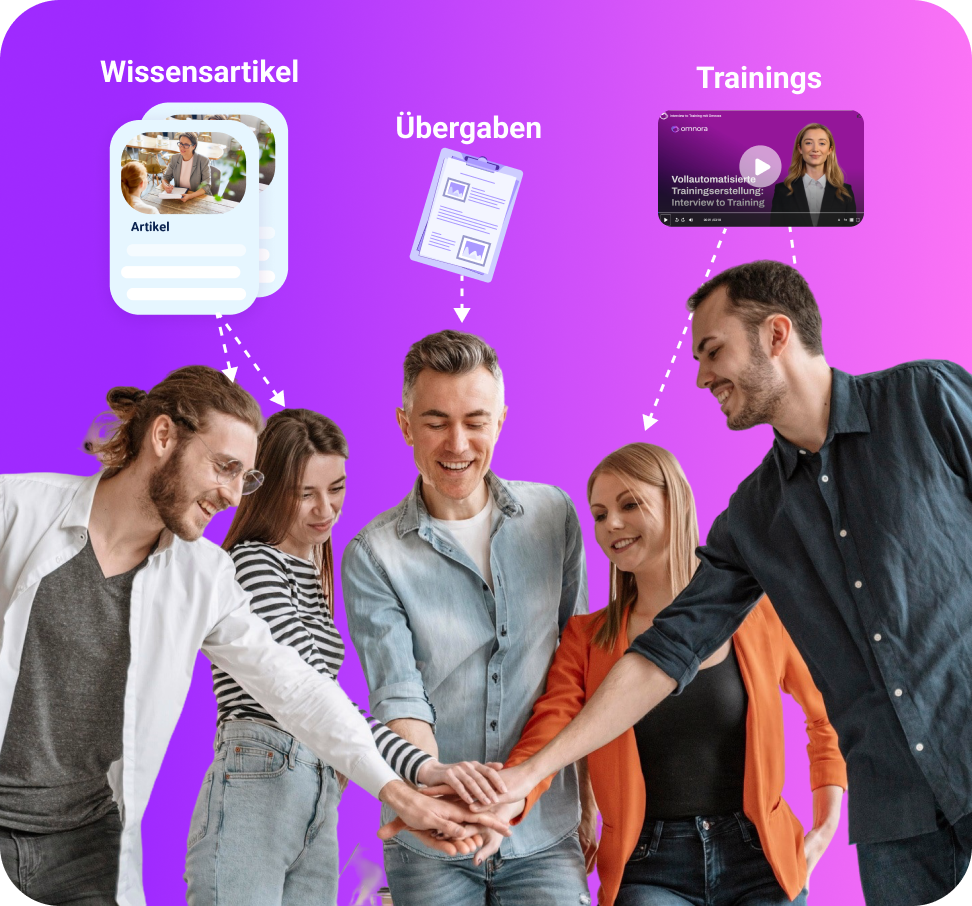
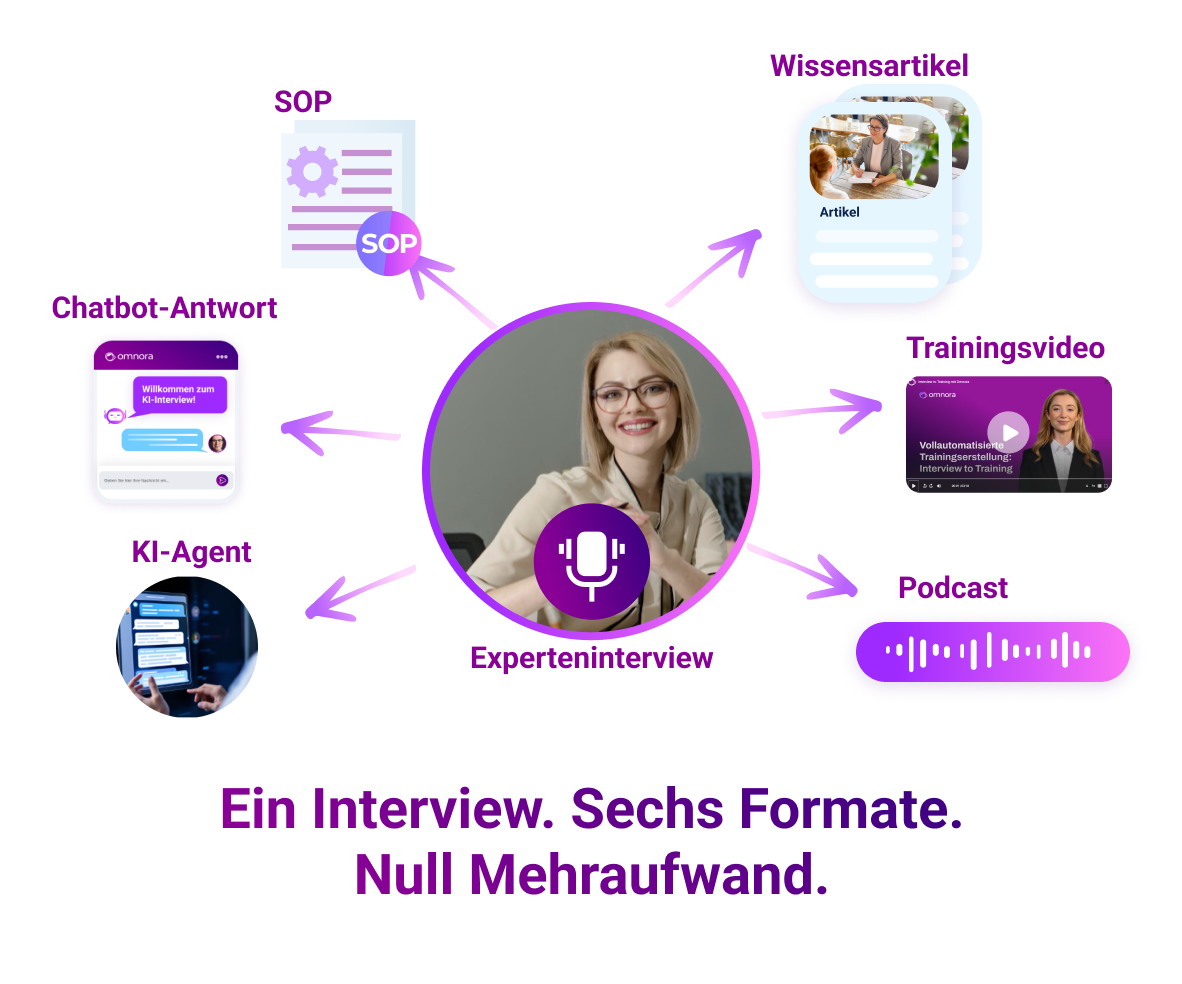
Each AI interview automatically creates formats tailored to the target group: handover documents, knowledge articles, training videos, podcasts, SOPs. SCORM/xAPI export directly to the LMS, embed into an intranet or teams. This is how reliable knowledge becomes a real transfer that is effective in everyday life. Experts are relieved because standard questions are answered via knowledge articles and training courses.

What this means for your employees:

Respond in minutes instead of days. Trainings that suit the role. Experts who are finally working on difficult cases again instead of answering standard questions. Onboarding that works even though the predecessor is already gone.
  • On average, it takes 8 months until new MA (SHRM) is fully productive
  • 82% higher employee retention through structured onboarding (Glassdoor)
  • 6 formats from an interview: article, video, podcast, SOP, handover, quiz

This is how secure knowledge becomes a real transfer

Experience how six knowledge formats arise from an interview.
service-backlog

Ready, your business knowledge
to a competitive advantage to
do?

Start with the use case that you like the most. A critical role. A specific bottleneck. In 30 minutes, we'll show you what can change.
Book a demo: Your use case, live in 30 minutes
We will show you intelligence management based on your specific use case.
Arrange a strategy discussion: Which use case has the greatest leverage?
Together, we'll find out where intelligence management delivers the fastest impact.

Trust the system that teams in over 650 companies use to secure, activate and utilize their knowledge for AI.

aok company logo
universal investment company logo
viessmann company logo
dpd company logo
db company logo
adac company logo
aok company logo
universal investment company logo
viessmann company logo
dpd company logo
db company logo

GDPR-compliant

EU hosting in Azure Germany. TISAX certified No US data transfer.

AI that doesn't train

Customer data is never used for model training.

EU AI Act & NIS-2 compliant

Governance framework for the regulatory framework from 2026.

3 APIs for every integration

RAG, REST, MCP. Your corporate brain in every system.