Any critical knowledge

One platform. Ready in minutes.

Whether it's knowledge preservation before retirement, an AI foundation for your agents, or onboarding in weeks instead of months: Intelligence Management transforms the knowledge in your employees' minds into a system that works for everyone. No documentation projects. No waiting.
650
+
Companies use Omnora
80
%
80% of company knowledge is undocumentedundokumentiert
30
%
the DACH workforce will leave by 2036
50
+
Languages
Book a demo
See Intelligence Management live or schedule a strategy session for your most pressing use case.
db company logo
db company logo

What our customers say:

Stephan Heyne

Head of HR Talent & Competence Management
"With Omnora, we have created more knowledge content in one year than in the last 10 years on the intranet."

Alois Gschrey

Personnel development
"We were looking for a streamlined solution to spread our information and Omnora met these requirements."

Shakya Udugama

Learning Expert
"If you have something to train, you can save a lot of time with Omnora"

Marius Leuchtner

Head of Recruiting and Personnel Development
"We used to need two to three takes per video and additional editing work. With Omnora's AI, I now can create a complete video from a PowerPoint presentation in just a few minutes."

Michael Pirke

Head of Academy
"We use Omnora for everything from managers to sales representatives, the HR department and our retail partners."

Magdalena Nolte

Senior Expert Learning Consulting
The Omnora AI makes our employees' work much easier

Knowledge is growing. Availability is not.

The numbers make it tangible:

42%

Job-related knowledge is not documented anywhere.
Panopto

1,8%

Knowledge workers spend hours each day searching for information.
McKinseya

50 to 200%

Job-related knowledge is not documented anywhere.
SHRM/Gallup

8

It takes months for new employees to reach full productivity.
SHRM
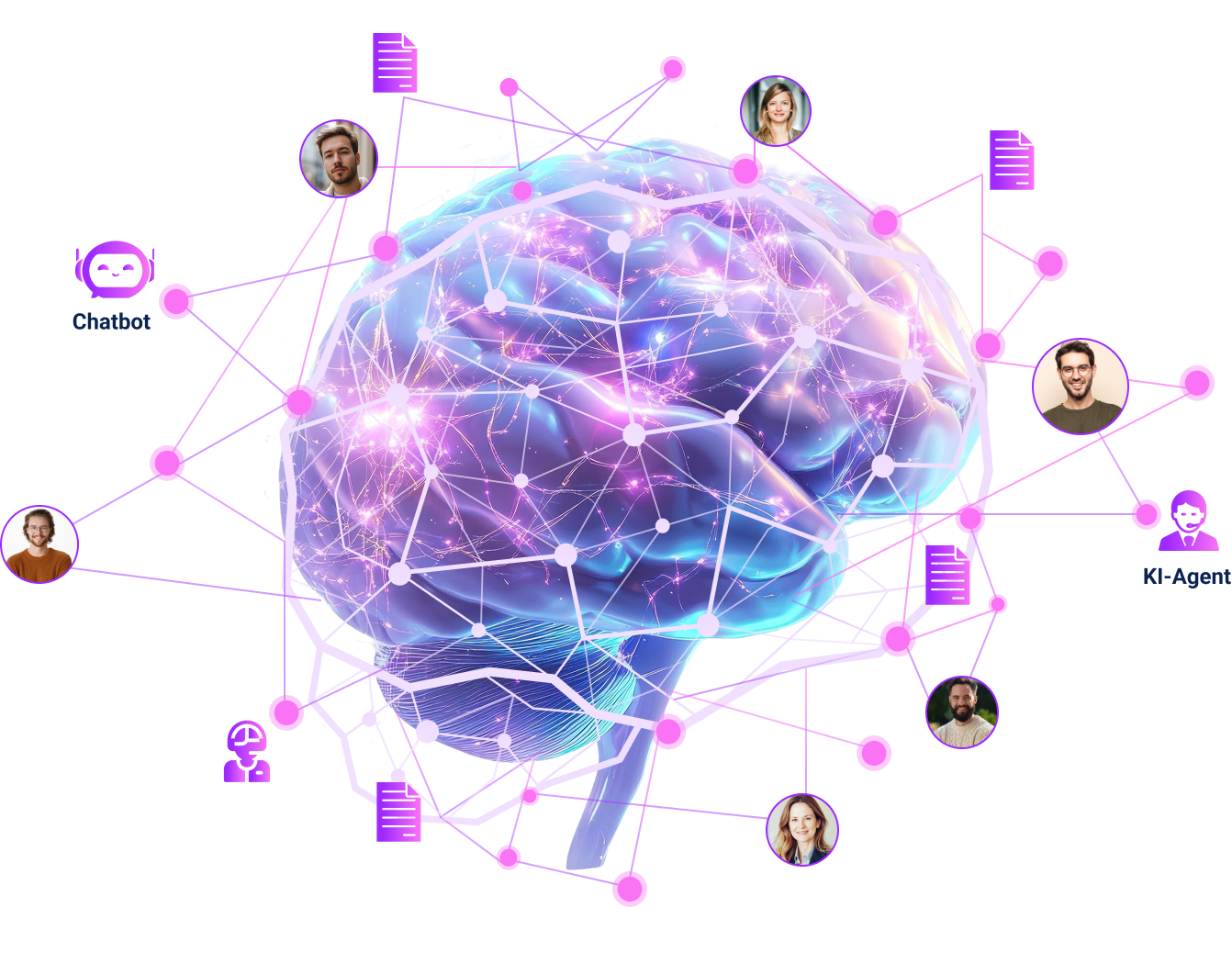
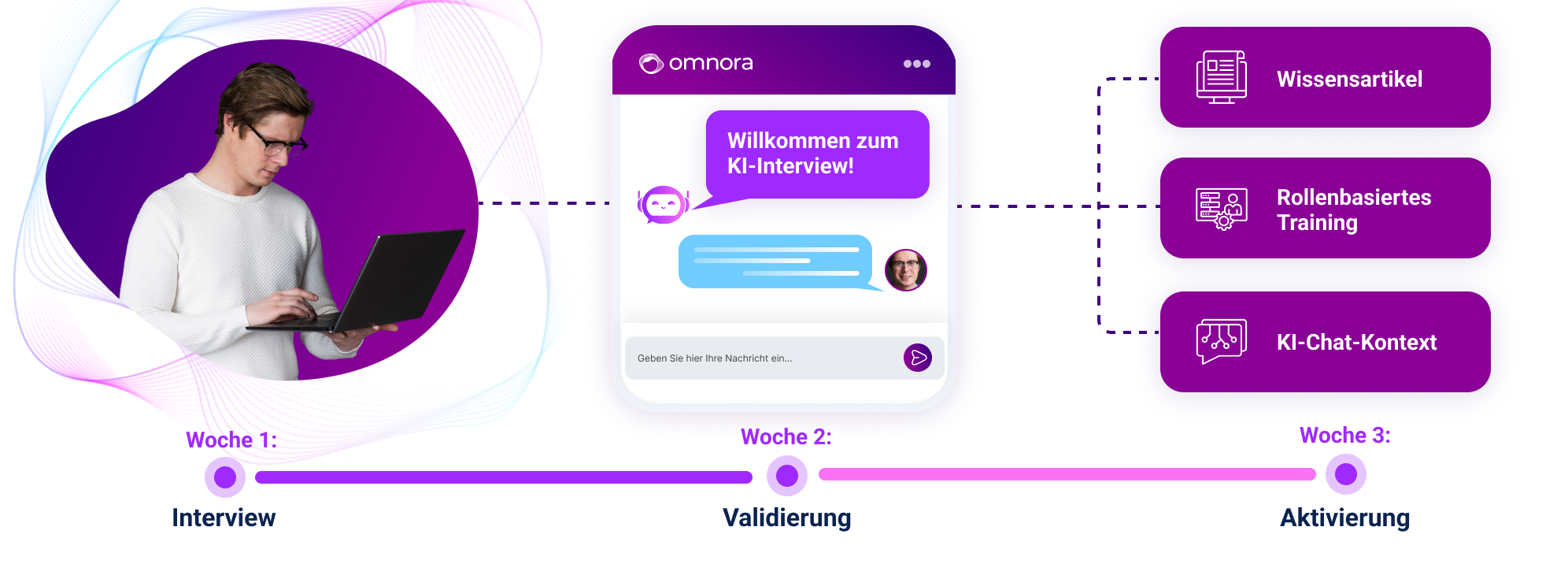
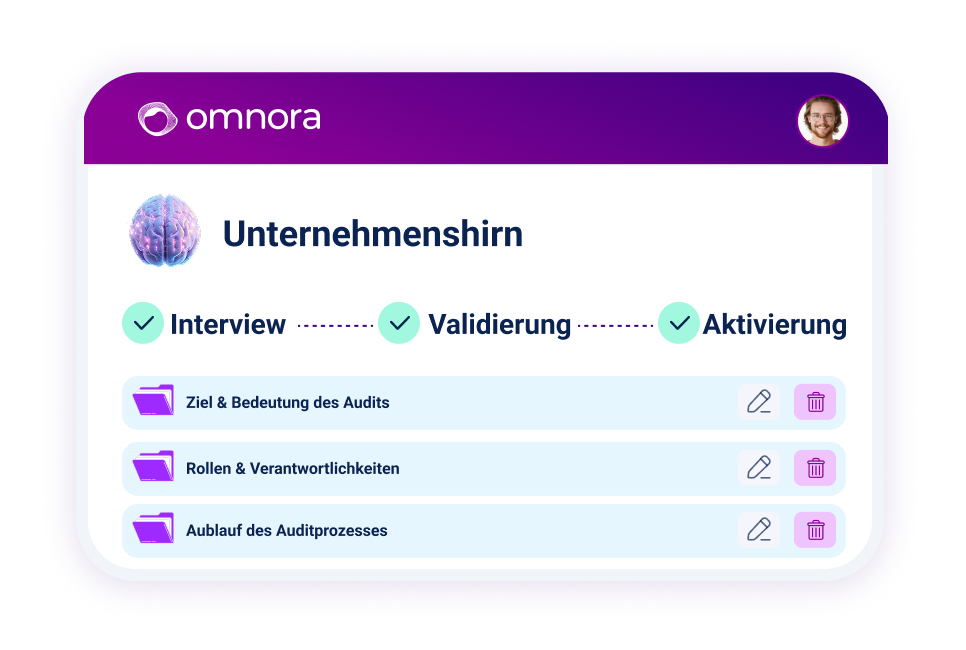
Intelligence Management reverses this relationship. Not with another wiki. But with a corporate brain that extracts knowledge from your employees' minds, validates it, keeps it up-to-date, and delivers it where it's needed. For people. For AI. For decisions.

Break up head monopolies

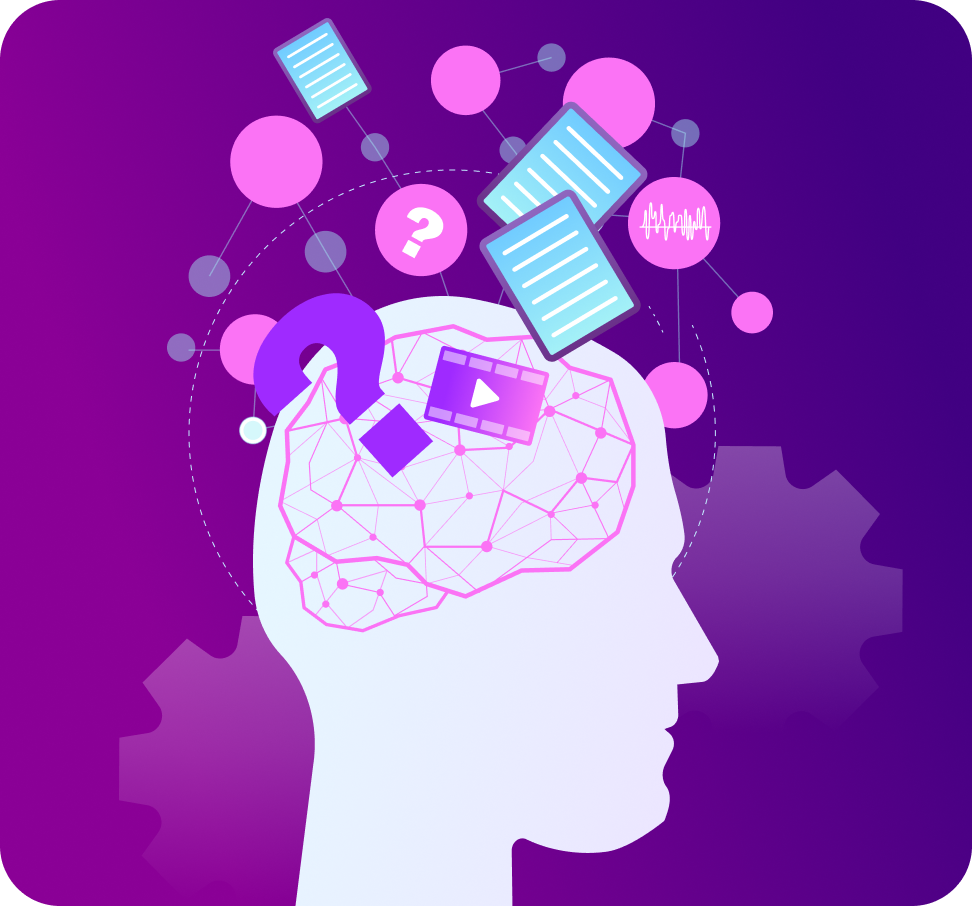
In every organization, there are one or two people per department on whom everything depends. If they leave, operations grind to a halt. Not because documents are missing, but because decision-making logics, exceptions, and informal networks are ingrained in their minds. The typical reaction? Bring back retired experts as consultants. At two to three times their daily rate.
Intelligence Management allows you to proactively secure this knowledge. AI-guided expert interviews extract implicit knowledge: decision-making logics, warning signals, and exceptions—not just process steps. Automated triggers from HR systems initiate knowledge capture upon retirement announcements, terminations, or role changes.

What this means for your management:

No more operational downtime when key personnel leave. No more costly recruitment efforts. Instead: structured, validated knowledge that remains within the company and is available to the team from day one.
  • 42% of job-related knowledge is not documented anywhere (Panopto Workplace Knowledge Study)
  • 2 to 3 times higher daily rate for rehired experts (SHRM)
  • ~4 weeks from theoretical knowledge to usable team knowledge (Hörmann/BASF practice)

See how knowledge retention works in practice.

Or let's identify your most critical roles together:

AI Enablement & Agent Enablement

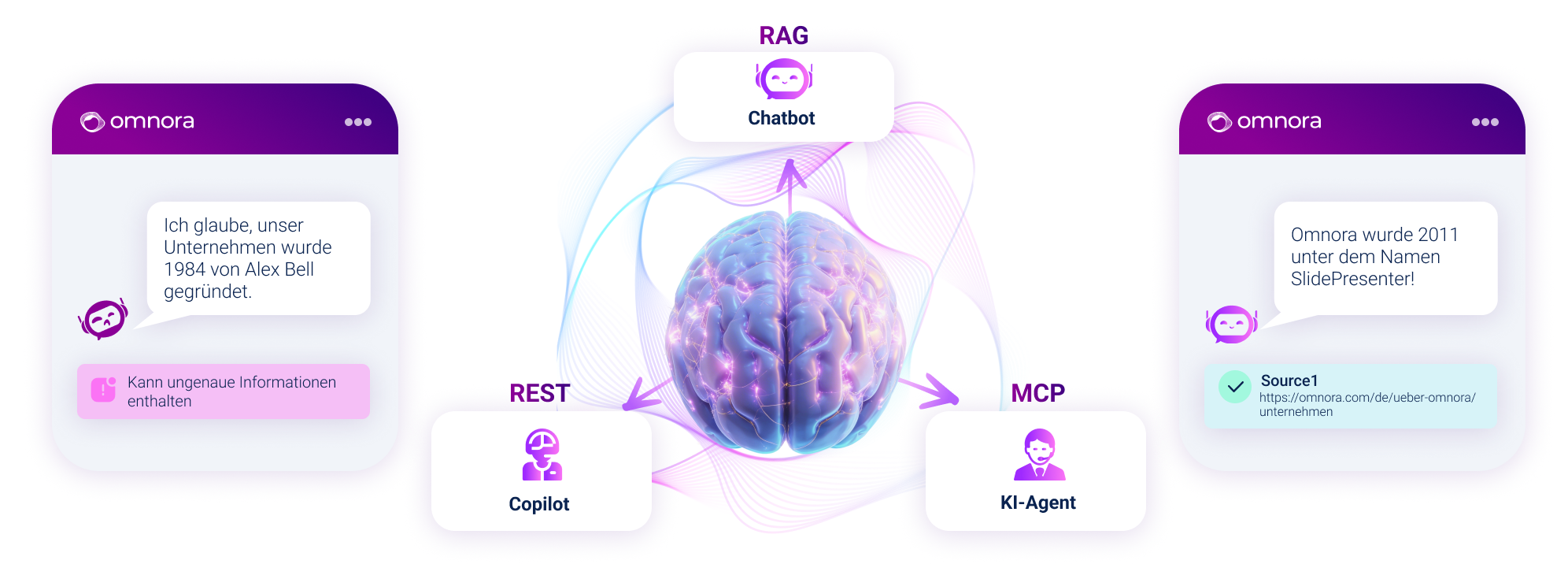
AI projects rarely fail because of the technology. They fail because of a lack of business context. $1.4 billion in business losses due to AI-driven mishaps were projected for 2024 alone, because chatbots access generic material instead of validated company knowledge. At the same time, over 50% of employees use private chatbots for work. Uncontrolled. Without GDPR compliance.
Intelligence Management provides the missing foundation. Your corporate brain becomes directly available to chatbots, copilots, and AI agents via RAG API, REST API, and MCP server. Validated, consistent knowledge with clear sources and approvals. EU-hosted, GDPR-compliant, no training data usage.

What this means for your CDO/CTO:

No more AI projects failing due to a lack of context. Instead: a central, shared knowledge base for all internal AI systems. The controlled alternative to your employees' uncontrolled chat management.
  • $1.4 billion in losses due to AI hallucinations in 2024 (Cornell / AI Incident Database)
  • Over 50% of employees use private GenAI for work (Gartner Feb. 2026)
  • 3 APIs (RAG + REST + MCP) for every integration, ready to use immediately.

This is how your corporate brain becomes the foundation for AI.

Are you planning an AI strategy?
Talk to us:

Securing and scaling action competence

When an expert leaves, the company loses more than just documents. It loses the ability to make decisions, avoid mistakes, and identify exceptions. Only 21% of companies have a formal succession plan. And even those that identify successors don't safeguard the predecessor's knowledge. That's the real gap.
AI interviews capture not only what knowledge, but also how knowledge is applied: decision-making heuristics, warning signals, and escalation paths. From this established expert knowledge, role-specific training, knowledge articles, and AI chat contexts are created. The skills become transferable. Succession planning becomes complete: candidates are identified AND empowered before the position is even vacant.

What this means for your CHRO:

Succession planning is gaining substance. It's no longer just about "Who will succeed?", but "What skills must the person possess, and how do we transfer those skills?". With a projected shortage of 7 million workers by 2035, internal knowledge transfer is becoming a matter of survival.
  • 79% of companies without a formal Succession Plan (SHRM)
  • 15 to 30% shorter onboarding time through role-based knowledge (Omnora/Süwag)
  • Germany will face a shortage of 7 million workers by 2035 (IAB)

Systematically transfer action competencies

Or discuss your succession plan with us:

Dynamic corporate memory

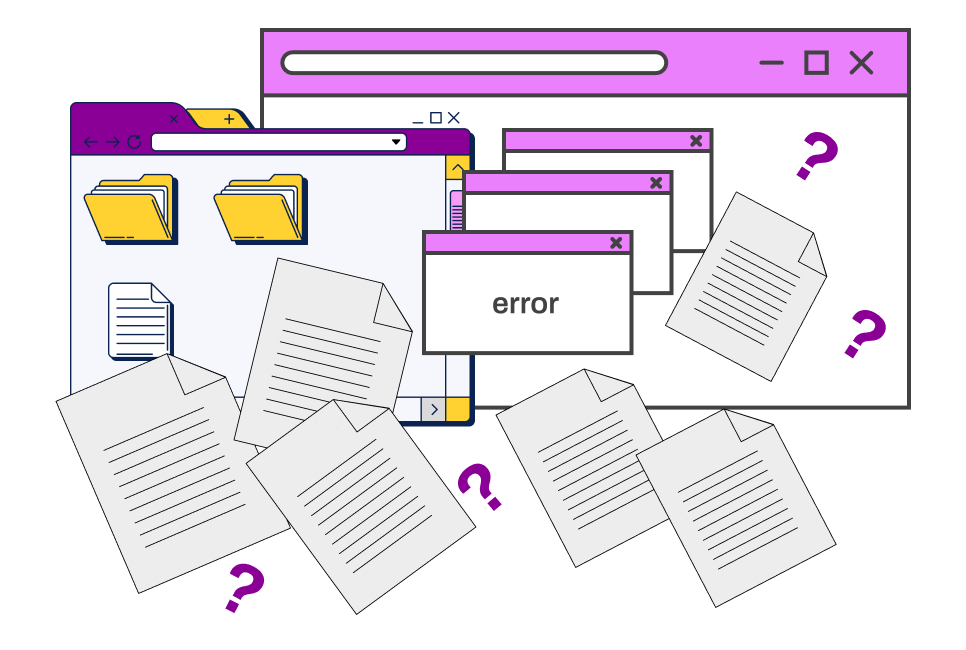
There are files, folders, wikis. But everyone still asks their colleagues. Because documentation doesn't equal usability. SharePoint pages become outdated, Confluence turns into a data dumping ground. 47% of employees can't find relevant information right away. What's missing: a system that keeps knowledge alive. Up-to-date, consistent, and easily discoverable.
Your corporate brain is constantly updating. Updates are integrated in a controlled manner, outdated versions are identified, and changes are made traceable. "Team A says X, Team B says Y" becomes visible, is resolved, and decisions are made. And the whole thing is AI-ready by design: structured for RAG, MCP, and Copilot. No subsequent cleanup is necessary.

What this means for your knowledge management:

No more fighting against outdated wikis and conflicting versions. Instead: a single source of truth that keeps itself up-to-date. And for the first time, it's also usable by AI systems.
  • Knowledge workers spend 1.8 hours per day searching for information (McKinsey)

  • 35% less search time through structured intelligence management (McKinsey Global Institute)
  • 47% of employees cannot find relevant information immediately (Gartner Digital Workplace Survey)

Do you see the difference between filing and memory?

Which areas of knowledge are you most passionate about?

Process optimization with experiential knowledge

Processes rarely fail because of the flowchart. They fail because of everyday practice. In your company, processes are officially the same, but are executed differently from plant to plant. This creates rework, escalations, and quality problems. The cause? The exceptions, handovers, and decision criteria that aren't documented anywhere.
Intelligence management reveals patterns: Where are the bottlenecks? Which steps trigger rework? Contradiction detection identifies the points where teams diverge. This leads to concrete process improvements, including standards and training. Not just analysis, but implementation.

What this means for your operations management:

Less rework, fewer escalations, less "that's just how we do it." Instead: consistent standards based on real experience. Not on the 2019 flowchart.
  • 10 to 25% less rework through consistent execution (Omnora customer projects)
  • 20 to 40% fewer inquiries to experts (Omnora customer projects)
  • +20 to 25% productivity increase through consistent standards (APQC)

Where does inconsistency cost you the most?

Or see the objection detection in action:

Auto Qualification

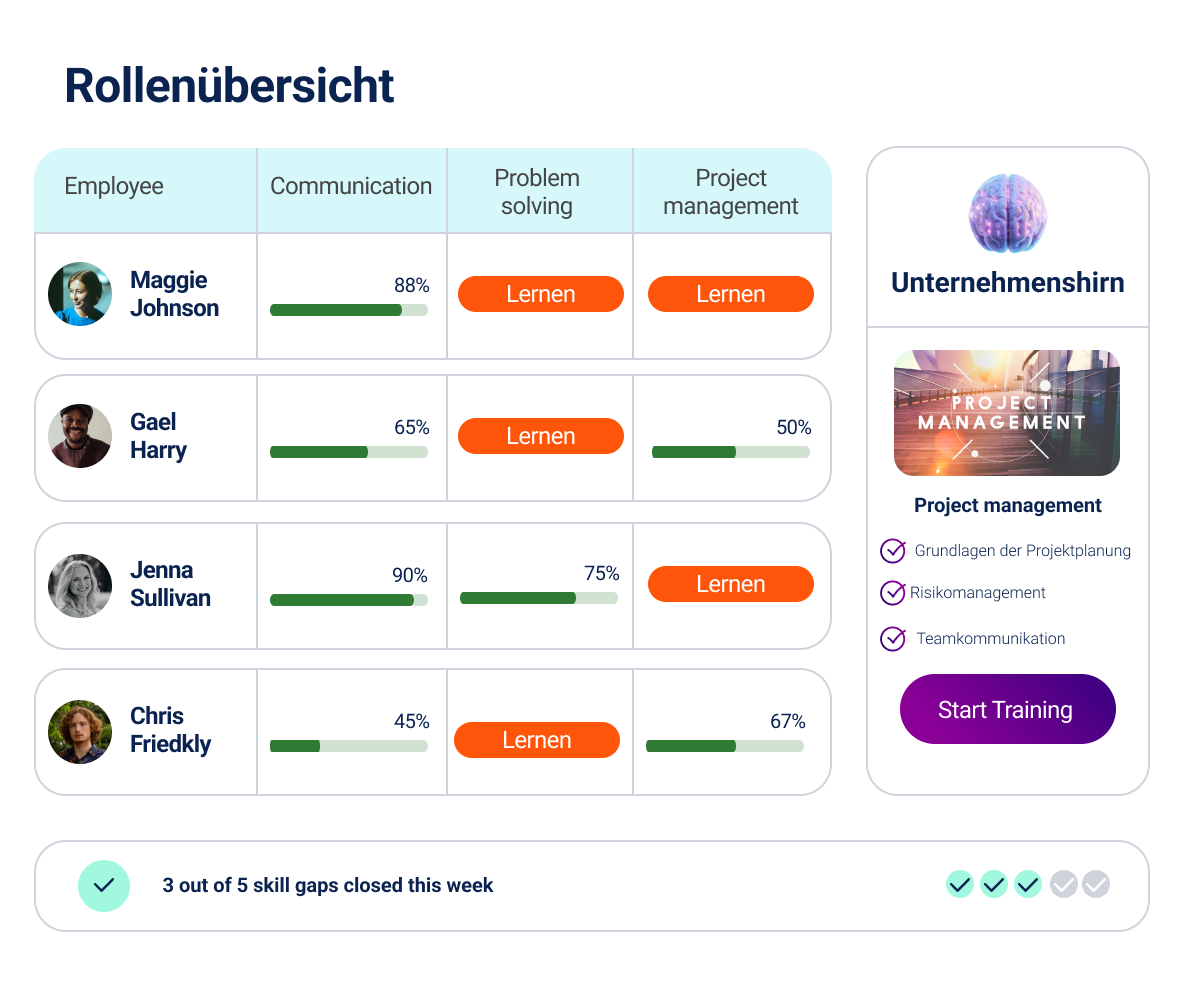
Training doesn't fail for lack of will, but for lack of perspective. L&D teams create training plans based on assumptions: What does someone need for this role? But reality changes faster than the training plan. New systems, modified processes, updated compliance rules. Suddenly, the training needs are different than they were six months ago.
The system automatically identifies what someone truly needs for a role, based on current, validated knowledge within your corporate brain. Skills gaps are closed where they pose a risk. Relevant content is delivered directly: knowledge articles, training courses, and AI-powered answers—all from a single, validated source.

What this means for your Head of L&D:

No more training plans based on assumptions. Instead: data-driven qualification that automatically adapts to changing requirements. Less manual needs assessment, more strategic impact.
  • 80% faster training program production with Omnora (Omnora customers)
  • 140+ languages ​​for automated training
  • 650+ companies use Omnora for knowledge and training production

Automatic qualification from the corporate

What does your current qualification process look like?

Knowledge activation: From the corporate brain to everyday work

Your company has knowledge. The problem was never the quantity. It's in the wrong place, in the wrong format, at the wrong level of detail. Executives need executive summaries. New employees need step-by-step guides. Experts need exceptions. One format for everyone? It doesn't work.
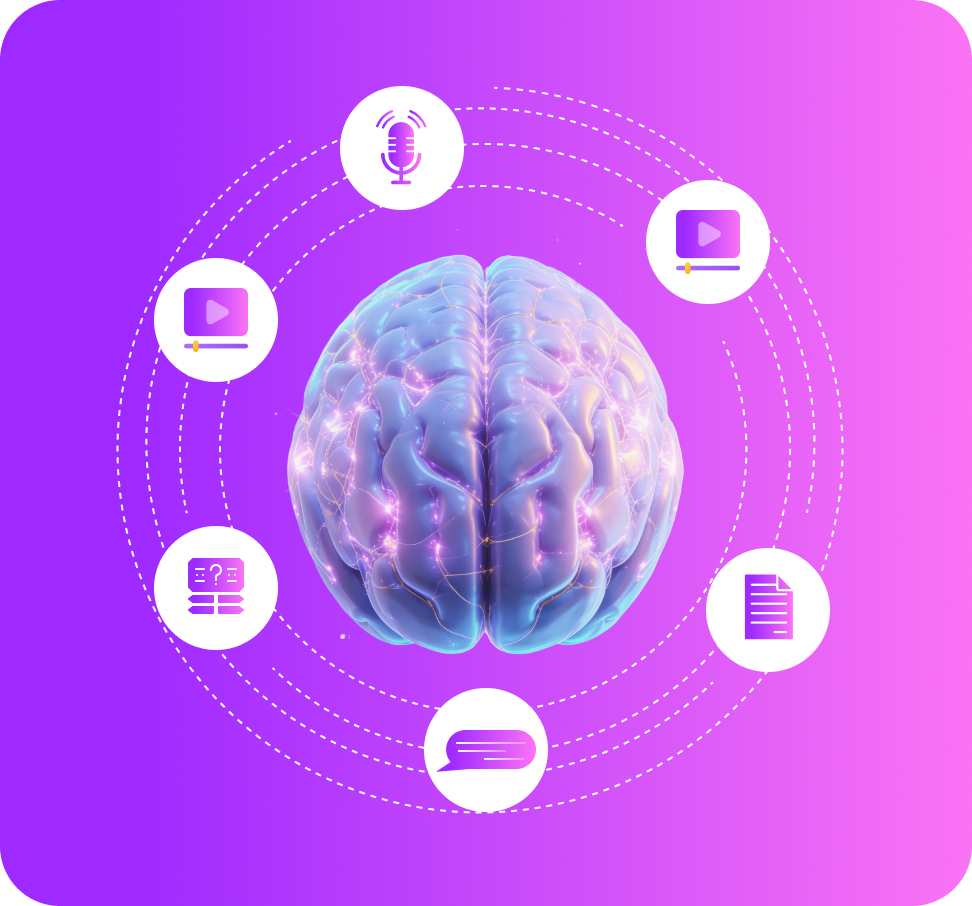
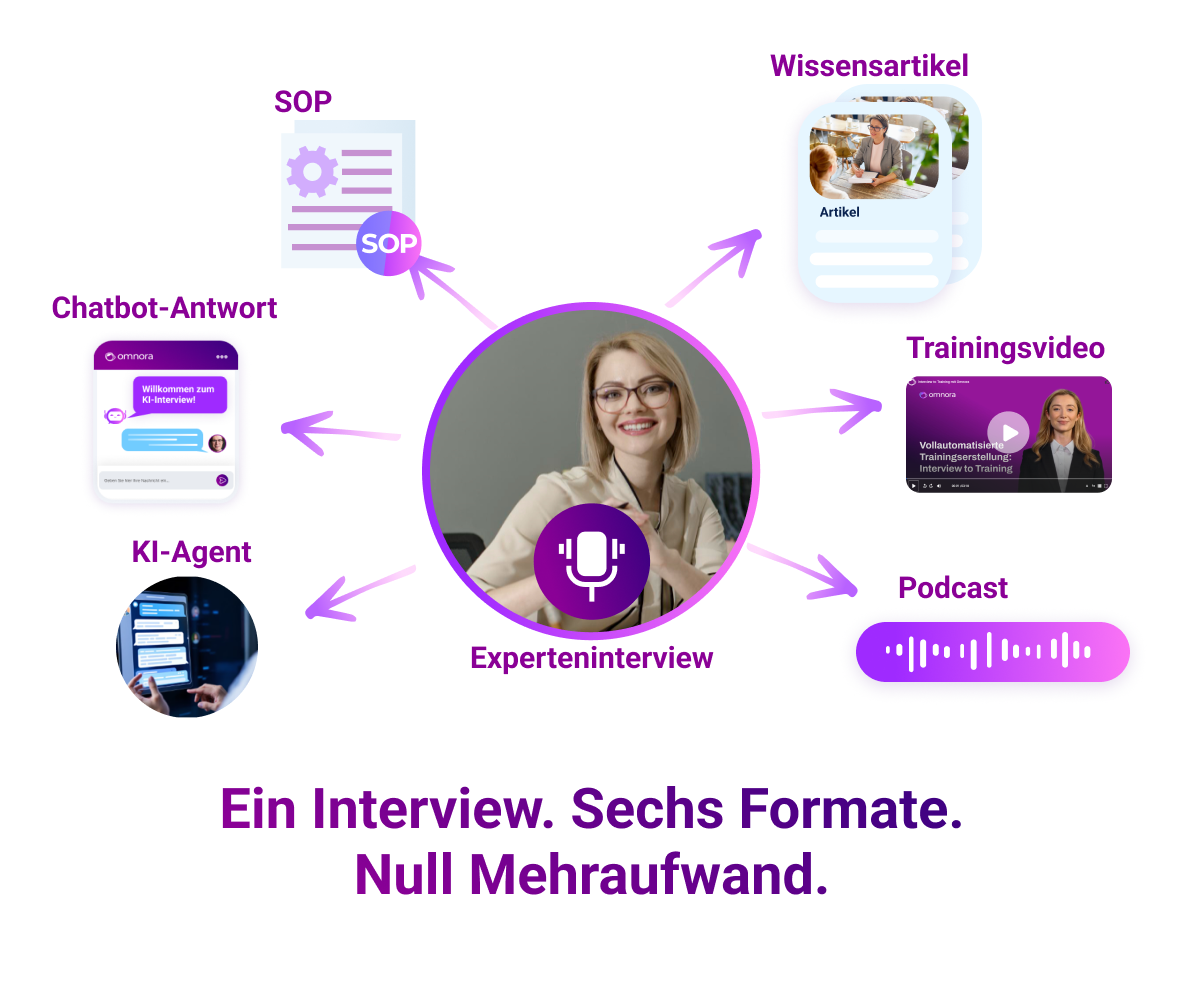
From the corporate brain, target group-oriented formats are created: knowledge articles, training videos, podcasts, SOPs, chatbot content, and AI agent content. An internal chatbot with validated source references answers frequently asked questions without blocking experts. SCORM/xAPI export directly to the LMS.

What this means for your employees

Answers in seconds instead of days. Training tailored to the role. A chatbot that doesn't hallucinate. And experts who are finally working on the difficult cases again, instead of answering standard questions.
  • On average, it takes 8 months for new employees (SHRM) to reach full productivity.
  • 82% higher employee retention through structured onboarding (Glassdoor)
  • 6 formats from one interview: article, video, podcast, SOP, chat, agent

Activate your knowledge in any format

Experience how six knowledge formats emerge from a single interview.

Strategic AI-Readiness

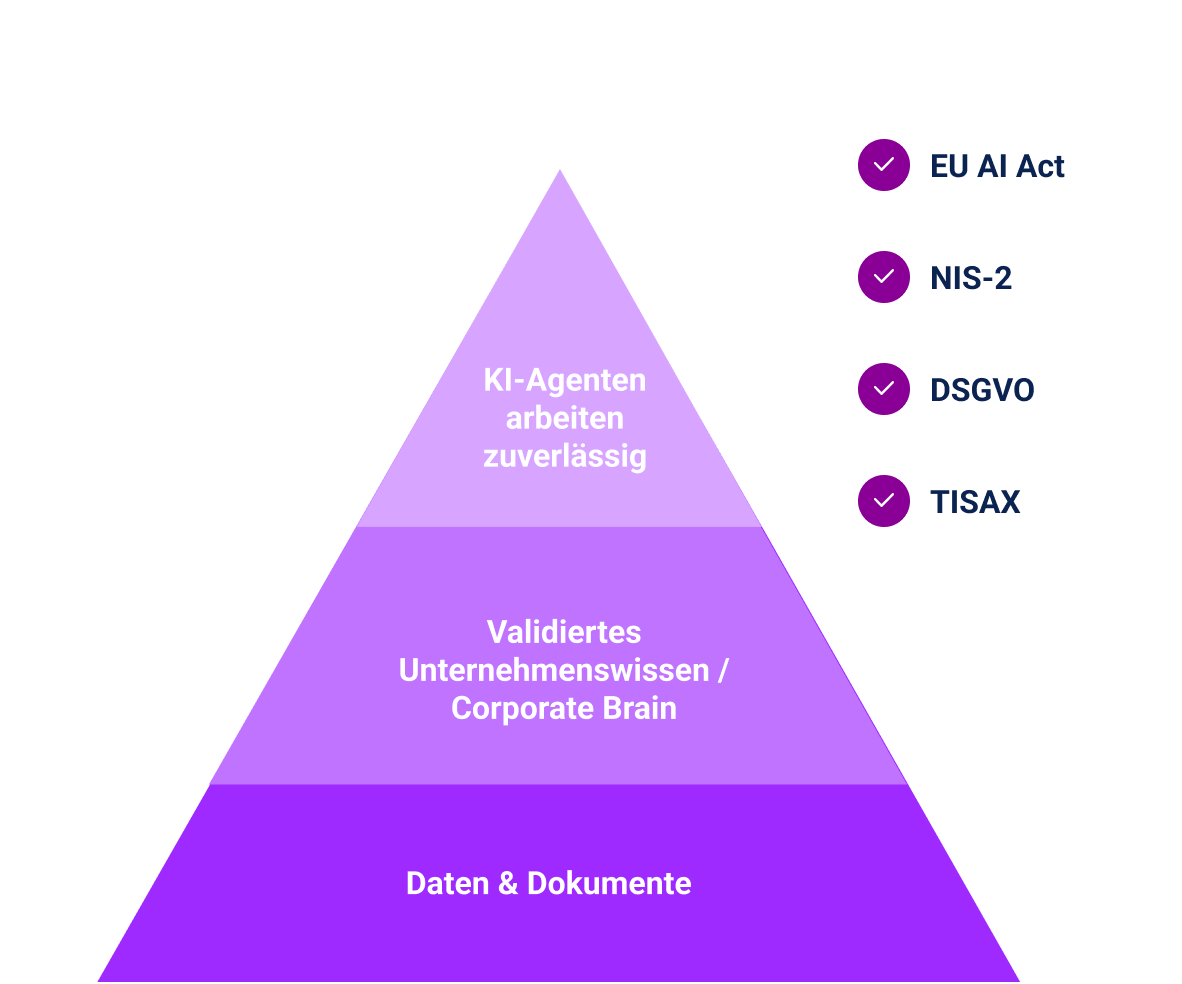
They're investing in AI: copilots, chatbots, agents. But are they also investing in the foundation on which AI is built? Most companies aren't. Without validated, structured business knowledge, AI remains an expensive experiment. Added to this are increasing compliance requirements: the EU AI Act makes AI governance mandatory from August 2026. NIS-2 classifies all AI systems as ICT systems.
Your corporate brain becomes the strategic AI foundation. Once captured and validated, knowledge is accessible to all internal AI systems via three APIs. Control instead of uncontrolled growth: All departments work with the same shared knowledge base. EU-compliant, TISAX-certified, no training data usage.

What this means for your management:

AI is transforming from a risk into a competitive advantage. No more uncontrolled proliferation. Instead: an AI strategy built on a solid, compliance-oriented knowledge foundation. Audit-proof, scalable, and future-proof.
  • EU AI Act: HR AI is considered high risk from August 2026 (EU Regulation)
  • NIS-2: AI = ICT system with risk-sharing obligations since December 2025 (Haufe/Advisori)
  • TISAX certified, EU hosted, no US data transfer

Is your company AI-ready?

Or see the AI ​​foundation in action:

Skill Management

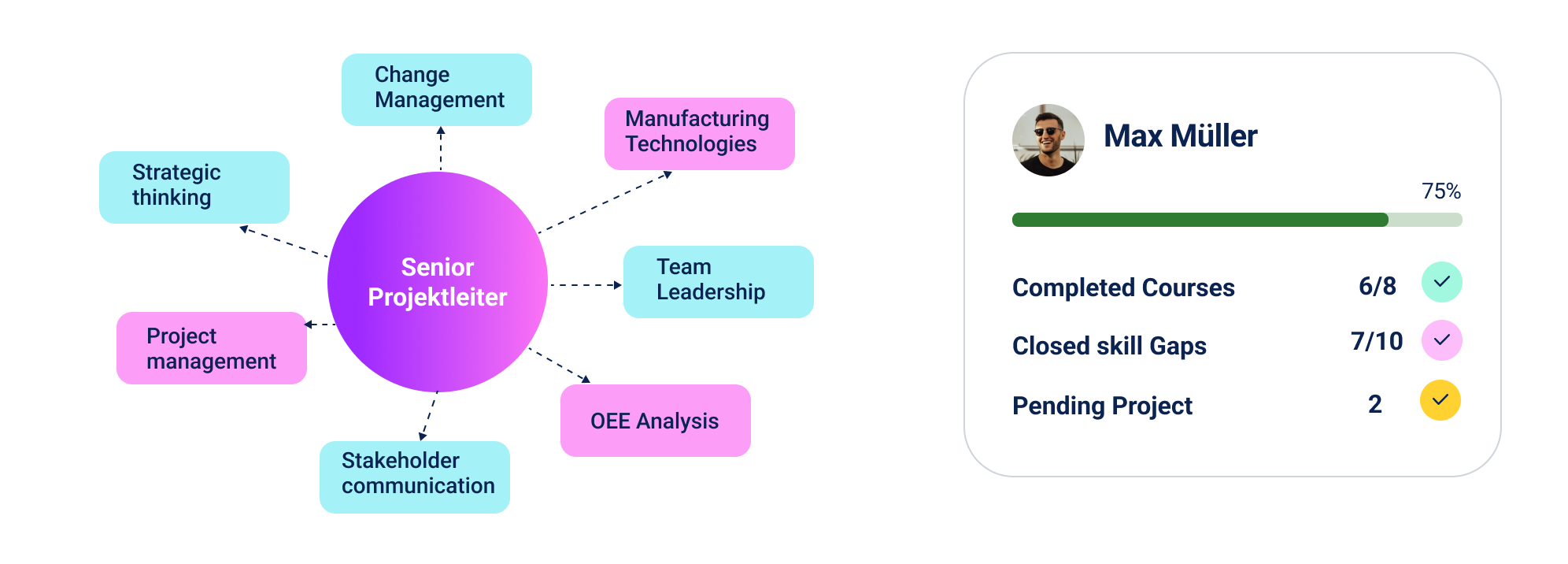
Who is truly capable of what? Who is replaceable? Who possesses knowledge that isn't reflected in the skills matrix? Traditional skills management tools capture self-assessments and external evaluations, but not actual skills and their underlying knowledge base. When an expert leaves, you don't just lose a row in the matrix; you lose a skill.
Intelligence Management links skills with real knowledge. It's not about "can do project management," but about the concrete decision-making logics, exceptions, and practical rules behind them. Skill gaps become visible, connected to the content that closes them. No gut feeling, but evidence-based development.

What this means for your CHRO:

Succession Planning bekommt Substanz. Sie wissen nicht nur, wer nachfolgen soll, sondern was er oder sie können muss. Und können es systematisch transferieren. Bei 90% der Unternehmen, die Renteneintritte als Wissensrisiko sehen, macht das den Unterschied.
  • 21% of companies with a formal Succession Plan (SHRM)
  • 90% view retirement as a knowledge risk (ProcedureFlow/Deloitte)
  • 30% of the workforce in Germany, Austria, and Switzerland will leave the job market by 2036 (Demography Portal)

Making skills visible, combined with real knowledge

How resilient is your current skill management?

Idea Management

Ideas are rarely lost because they're bad. They're lost because no one makes them tangible. Employees have ideas for improvement every day: regarding quality, handovers, tools, and customer cases. Without structure, these ideas get lost in meetings and Slack threads. The best optimizations come from practical experience. But they almost never reach decision-makers in a form that can be acted upon.
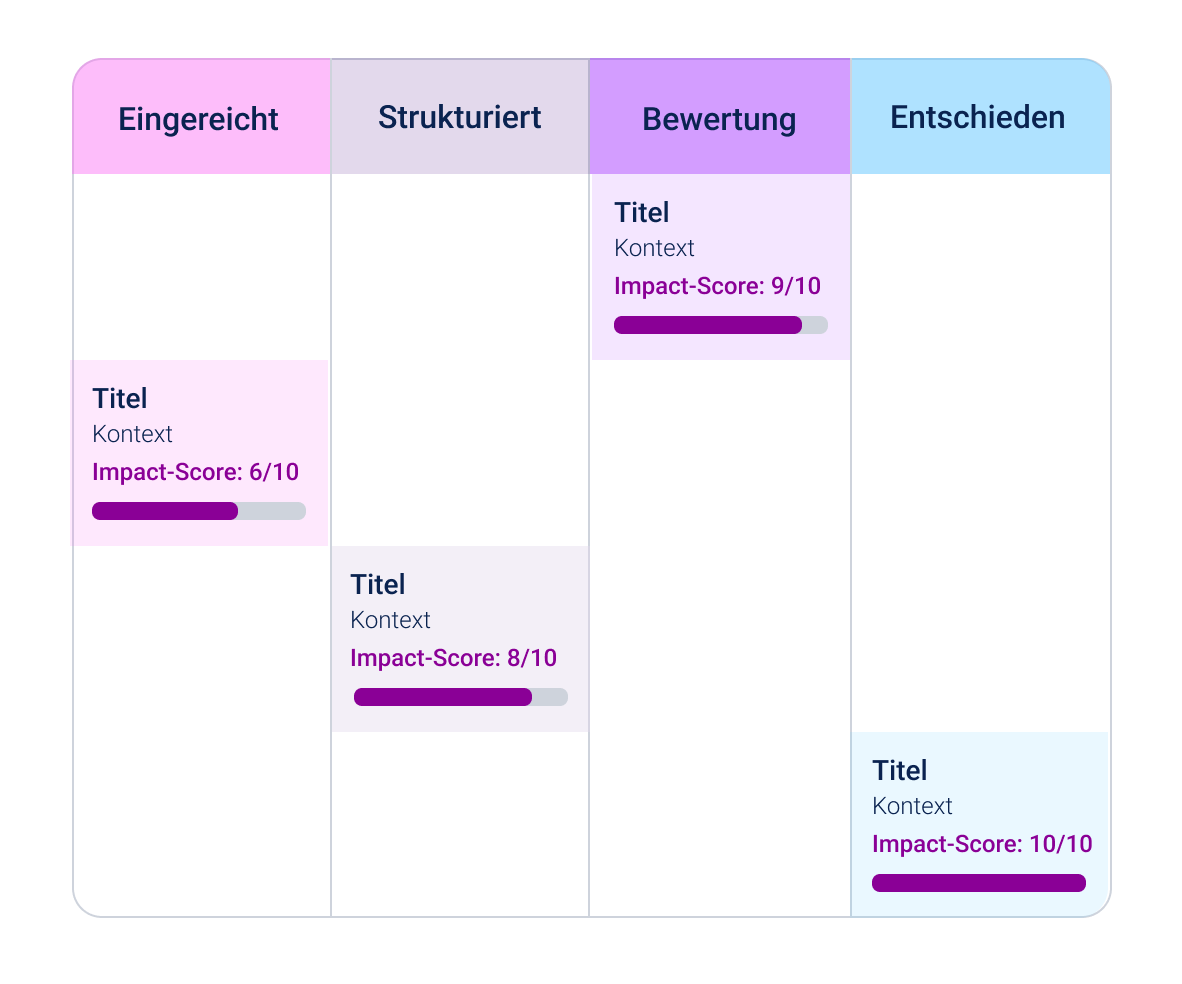
Ideas are captured where they originate and given a clear form: problem, context, proposal, expected effect, dependencies. A "good idea" becomes a decision-making document. Linked to the corporate brain, ideas are evaluated within the context of existing knowledge. No duplication of effort, no vacuum.

What this means for your operations management:

Improvement potentials from practical experience are finally reaching decision-makers. In a form that enables a decision. Not as loose feedback, but as an evaluable, prioritizable template.
  • 60% better decision-making after IM implementation (APQC Knowledge Management Study)
  • It costs between 50% and 200% of an annual salary to replace a qualified professional (SHRM/Gallup)

See Idea Management in action

What potential for improvement lies dormant within your teams?
service-backlog

Ready to turn your company
knowledge into a competitive advantage?

Start with the use case that's most pressing for you. A critical role. A specific bottleneck. In 30 minutes, we'll show you what can change.
Book a demo: Your use case, live in 30 minutes
Wir zeigen Ihnen Intelligence Management anhand Ihres konkreten Anwendungsfalls.
Schedule a strategy meeting: Which use case has the greatest impact?
Together we will find out where Intelligence Management delivers the fastest impact.

Trust the system that enables teams in over 650 companies to secure, activate, and utilize their knowledge for AI.

aok company logo
universal investment company logo
viessmann company logo
dpd company logo
db company logo
adac company logo
aok company logo
universal investment company logo
viessmann company logo
dpd company logo
db company logo

GDPR compliant

EU hosting in Azure Germany. TISAX certified. No US data transfer.

AI that is not trained

Customer data is never used for model training.

EU AI Act & NIS-2 compliant

Governance framework for the regulatory framework from 2026 onwards.

3 APIs for each integration

RAG, REST, MCP. Your corporate brain in every system.