When does an Articulate 360 alternative make sense?
Articulate Storyline and Rise set the standard for branched scenarios and simulations, and there Articulate remains the stronger choice. Most L&D effort, however, goes into the 90 percent routine: instructions, software training, onboarding. For that, Articulate means lots of manual work, high maintenance and dependence on a few trained specialists. An alternative pays off when the backlog stays high, trainings go stale after every release and rollouts are multilingual. Often running both is the pragmatic answer.
- Articulate for depth. For simulations and branching it remains the stronger choice.
- Routine is the bottleneck. The 90 percent of standard content ties up capacity.
- Both, not either-or. Complex courses in Articulate, volume in the AI tool.
Articulate is not the problem. The calendar is.
Storyline can do almost anything. That is exactly why, in many L&D teams, two people really master it and everyone else waits until one of them has time. Feature depth is not in question. The question is whether you need that depth for your most frequent tasks.
What makes Articulate strong
Storyline and Rise set the standard for interactivity. Branching scenarios, complex simulations, granular control over every element, a reliable LMS export and a large community where a solution exists for almost any problem. If you build simulations with many decision paths, you are working in the right place.
We are not saying this out of politeness. For branching scenarios and simulations, Articulate is stronger than Omnora. That limit belongs stated openly.
Where the maths tips over
In practice the effort does not go into the interesting 10 percent of courses. It goes into the 90 percent of routine: safety briefings, software training after a release, onboarding modules, product updates.
For that 90 percent, Articulate means:
- Everything manual. Script, recording, editing, voiceover, translation.
- No AI support inside the production process.
- High maintenance effort. Every change is handwork and a fresh LMS import.
- Usable only by trained professionals. Subject-matter experts cannot deliver themselves.
- Focus on slide logic rather than video.
- A US vendor, which lengthens procurement in regulated industries.
Sound familiar? Training demand grows every quarter, production capacity in L&D stays the same. The backlog is then not a planning weakness, it is arithmetic. Why hiring more people does not fix it is set out in the piece on scaling training production.
The other approach
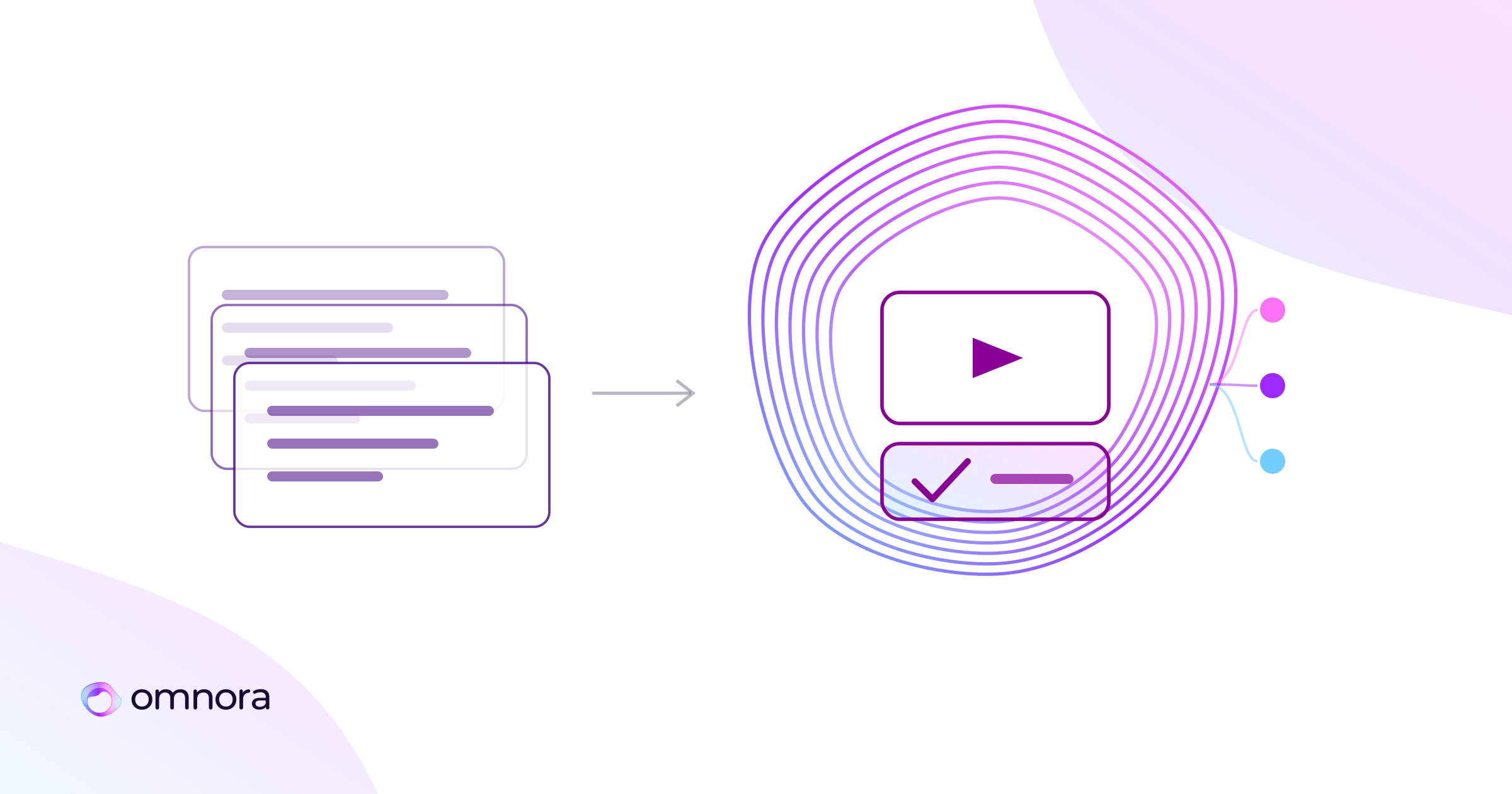
Omnora reverses the order. Instead of building a course, you capture knowledge and let the course emerge.
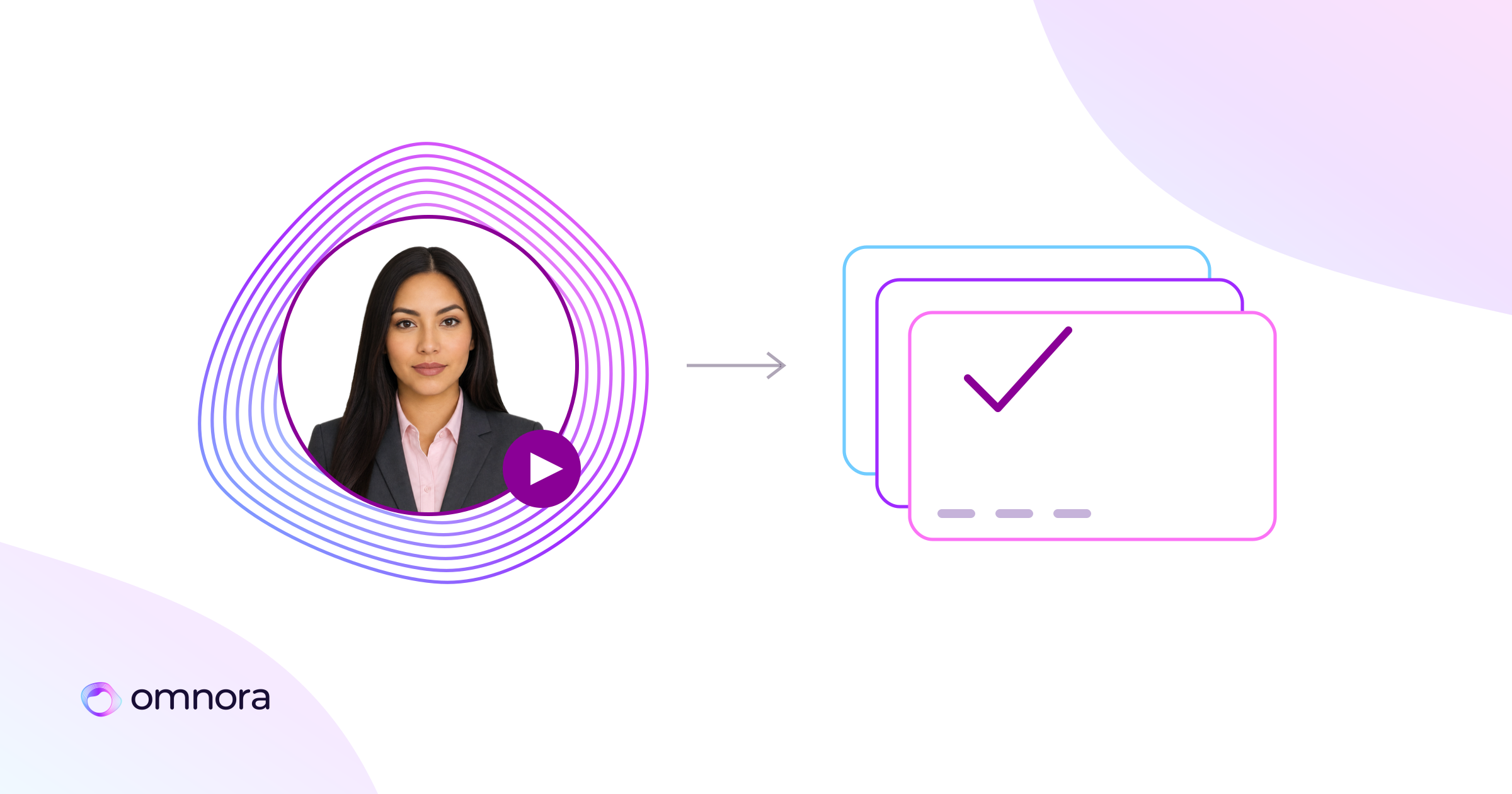
A subject-matter expert runs an AI-supported interview, or you upload an existing document. The system produces the script, voiceover, avatar or screencast, quiz and the SCORM export. Typically up to 80 percent faster production per training hour compared with classic course production. From weeks to hours. For mandatory training, time-to-market is usually under 24 hours.
These are experience values, not a guarantee. What comes from outside and holds up: at DPD Germany production time per learning video fell from about a working day to around an hour, measured across more than 1,800 videos in two and a half years.
The difference that counts in operations
Two things weigh more day to day than any production figure.
1 Subject-matter experts can deliver themselves
No instructional design training, no camera, no authoring-tool course. At DPD roughly 240 active authors produce content. L&D reviews and approves instead of building every course.
2 Updates without the LMS circus
SCORM remote update means you change the content, the change takes effect, no re-import. After a software release that is the difference between an afternoon and two weeks. This is precisely the line item that dominates total cost, as the honest cost breakdown shows.
On top of that come compliance arguments that often decide European deals: hosting in Germany on Azure, GDPR compliant, TISAX assessed, no use of your data for model training.
When you should stay with Articulate
Clear answer: when branching simulations are your core business, when you have an established team of instructional designers who know Storyline, and when your volume of routine training is low.
Then a switch is not an improvement, it is a loss of depth.
When a switch pays off
When your backlog stays high for months. When training goes stale after every release. When you have to roll out in several languages and translation is a project of its own. When expert knowledge sits in people's heads and never reaches a course because the path there is too long.
If what you mainly need is video quality and no branching scenarios, the distinction is drawn in the comparison with the Synthesia alternative.
Much of this can also be solved in parallel. Several L&D teams keep Articulate for the complex cases and produce the volume with Omnora. That is often the most pragmatic route because it forces no migration.
Run the numbers on your own backlog: how many of your last 20 courses would have needed branching scenarios? That answer decides, not the feature list.
How Omnora compares as an alternative for corporate learning: training from your knowledge, with quiz, SCORM export and hosting in Germany.
Omnora vs. Synthesia →Häufige Fragen
What makes Articulate 360 particularly strong?
Interactivity: branched scenarios, complex simulations, granular control over every element and reliable LMS export. For demanding learning experiences with decision paths, Articulate sets the standard, and that should be said openly.
Where does Articulate reach its limits in daily L&D work?
With the bulk of routine content. Scripting, recording, editing, voiceover and translation are manual, every change means a new LMS import, and only trained specialists can use the tool. Subject-matter experts cannot deliver content themselves.
When should I stay with Articulate?
When branched simulations are your core business, you have a well-practised team of instructional designers and your backlog is under control. Switching would then mean losing depth, not gaining efficiency.
When does switching pay off?
When the backlog stays high for months, trainings go stale after every software release and multilingual rollouts are projects in their own right. Check how many of your last 20 courses actually needed branched scenarios.
Can Articulate and an AI authoring tool be used side by side?
Yes, and often that is the most pragmatic route. Articulate stays for complex branched courses, while routine content is produced with an AI-assisted tool where business teams contribute directly and updates apply without re-import.
Quellen
- Omnora: typically up to 80% less production time per training hour; SCORM export with remote update; 140+ languages for voiceover and subtitles [Omnora field value]
- Cleared customer reference: production time per learning video and number of active authors, as stated in the article [Omnora field value]