When is an Easygenerator alternative worth it?
Easygenerator is strong when business teams should build simple slide- and text-based courses themselves. An alternative pays off when three things come together: more than about 20 trainings a year that need regular updates, at least two languages, and a growing share of topics that have to be shown rather than described. Then video, voiceover and language versions are core needs, not side formats. If only one signal applies, switching is usually no gain.
- The approach stays right. Letting business teams produce is the real scaling lever.
- Format decides. Slide courses hit limits on video, voiceover and languages.
- Three signals, not one. Only volume, languages and video need together change the maths.
Easygenerator was the right decision. Three years ago.
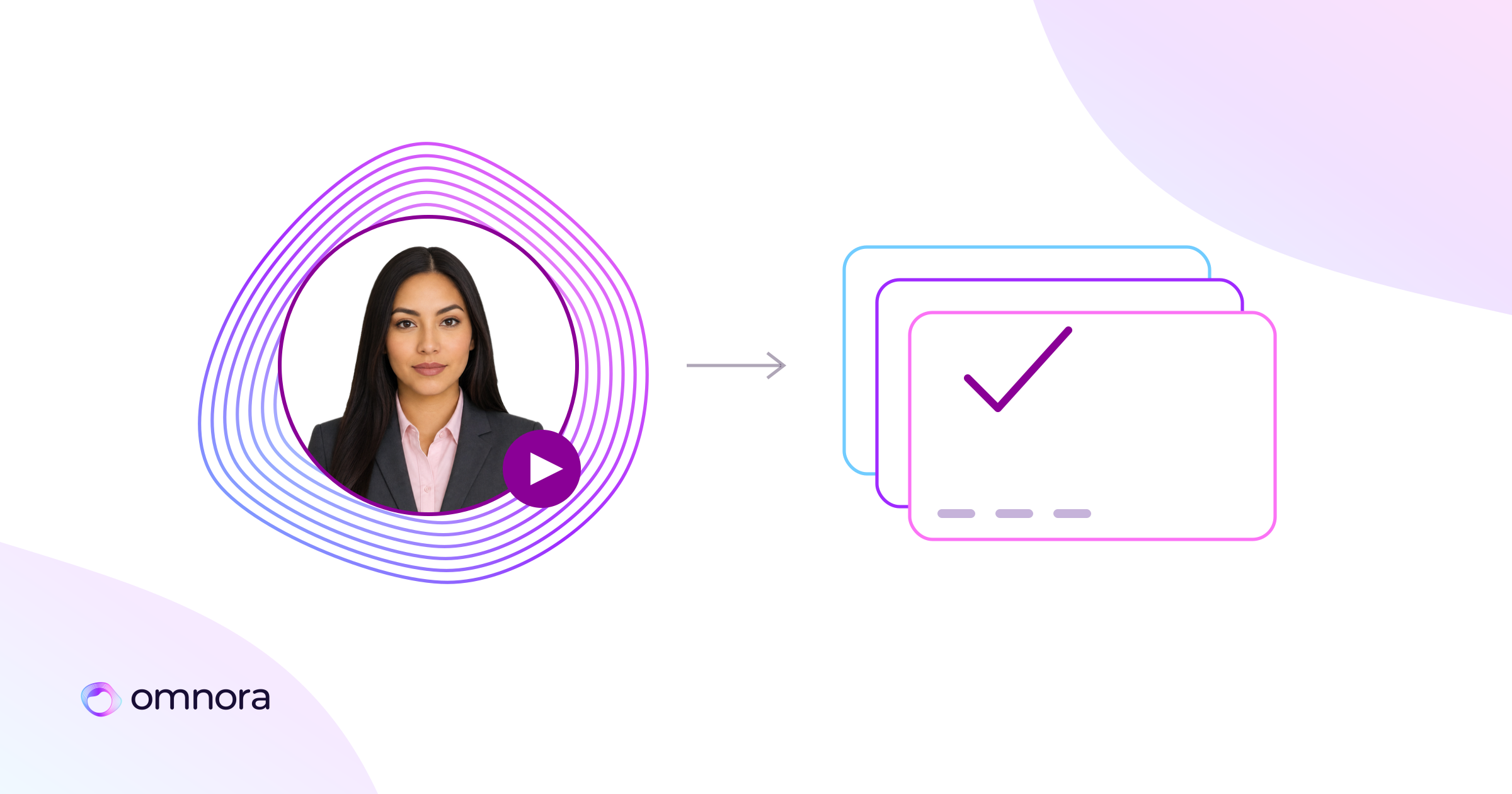
Back then the point was to get training production out of its dependency on two Storyline specialists and let the business units produce for themselves. That worked. The question today is a different one: is a slide-based tool still enough when your content goes stale constantly and has to roll out in five languages?
What Easygenerator does well
This belongs at the start, because the strengths are real. Getting started is easy, subject-matter experts cope without instructional design training, the interface is uncluttered, and in the European mid-market the tool is established. Anyone coming from PowerPoint finds their way around within an hour.
The approach of letting business units produce themselves is the right one. That is precisely the lever that makes training production scalable, whatever the tool.
The difference sits elsewhere: in what comes out of the tool at the end.
Where the maths tips over
Easygenerator is slide- and text-based at its core. Content becomes structured pages with text, images and questions. For knowledge that can be read, that is sufficient.
Three requirements run against that design.
1 Video is no longer a side format
Software training needs screencasts. Safety briefings work better shown than described. Anyone who wants video produces it elsewhere and embeds it. And you are back to a tool chain somebody has to maintain.
2 The input stays handwork
A slide-based tool speeds up the assembly. It does not speed up what comes before: the script, the alignment with the business unit, the three rounds of correction. In most teams that is the larger block of time, as the honest cost breakdown for a training video shows.
3 Language versions stay a project
Text can be translated. A voiced training with a speaker, timing and subtitles cannot, not in one step. From the third language onwards this item dominates total cost.
None of these three is a defect in the narrow sense. They are the consequence of a deliberate product decision: Easygenerator builds slide courses, not video courses.
The other approach
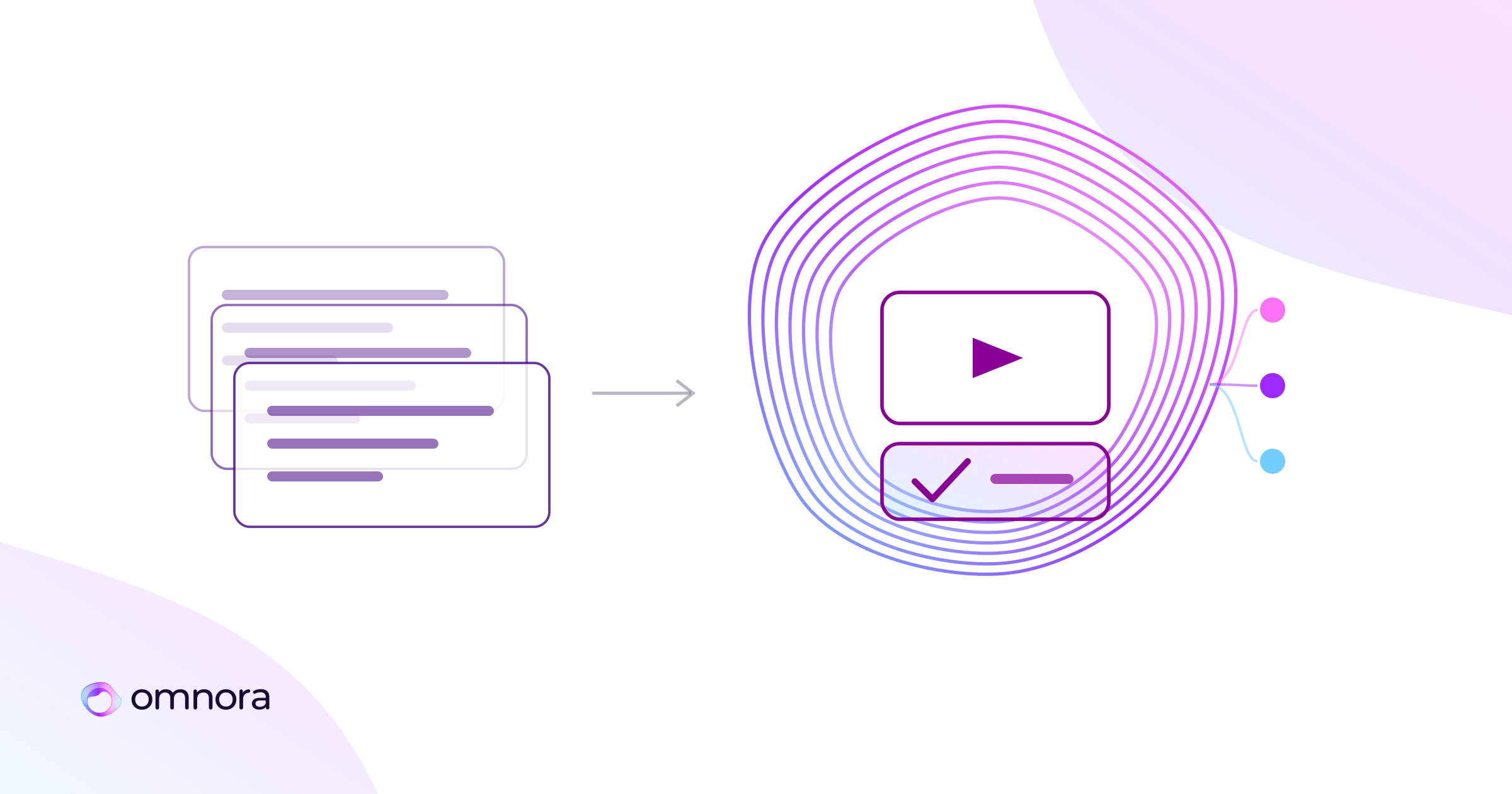
Omnora starts one level earlier. Instead of building a course, you capture knowledge and let the course emerge.
Three ways in:
- Interview-to-Training. An AI-supported expert interview gets the knowledge out of the head, probing where a statement stays incomplete.
- Document-to-Training. Existing work instructions, SOPs and presentations become structured courses.
- Text-to-Video. The knowledge is written down, the system turns it into training.
What comes out is a complete course: avatar or screencast or live video, voiceover, a quiz inside the video, SCORM and xAPI export, subtitles and translation. 120+ avatars, 140+ languages for voiceover and subtitles.
Typically up to 80 percent faster production per training hour compared with classic course production. That is an experience value, not a guarantee.
The two points that decide it in operations
1 Updates without the LMS circus
SCORM remote update means you change the content, the change takes effect, no re-import. Do the sum for your own portfolio. At 200 courses and half an hour of LMS handwork per update, that is 100 hours a year consisting purely of import and versioning.
2 Language version as an export rather than an undertaking
The source stays one, the language versions derive from it. That also removes version drift, where the source is current and four others sit on the state of two years ago. How that plays out in international rollout, and what still needs a human to check, is covered in the piece on multilingual training videos without a translation agency.
On top of that come compliance characteristics that often decide procurement in regulated European industries: hosting in Germany on Azure, GDPR compliant, TISAX assessed, no use of your data for model training.
What this looks like in practice
DPD Germany has worked this way since 2022: around 9,000 employees, 79 depots. In two and a half years more than 1,800 videos, produced by roughly 240 active authors from the business units. Production time per learning video fell from about a working day to around an hour.
The interesting figure is not the hour, it is the 240. That is the same thought you had when you chose Easygenerator, one format step further.
Honest about the limit
For highly complex branching course scenarios and simulations, Articulate is stronger than either. Omnora is deliberately specialised in video plus microlearning. If your core need is nested decision paths, neither of the two here is the right answer. The distinction is drawn in the comparison with the Articulate 360 alternative.
And if your content is mostly text, changes rarely and rolls out in one language only, a switch is no gain. Then Easygenerator is working exactly in its territory.
When a switch pays off
Three signals that together tip the balance:
- More than roughly 20 trainings a year that need regular updating
- At least two languages in the rollout
- A growing share of topics that have to be shown rather than described
If all three apply, the maths shifts considerably. If only one does, probably not.
A pragmatic middle route works too: Easygenerator stays for text-based courses, the video track runs in parallel. That forces no migration and delivers solid figures for the decision after six weeks.
The test that brings clarity
Take your last ten produced trainings and answer three questions. How many of them would have been better as video? How often has each been updated since creation? In how many languages does it exist?
The third question is the decisive one. If the answer is mostly one, although you operate across several sites, that is not a need that is absent. It is one that failed on effort.
How Omnora compares as an alternative for corporate learning: training from your knowledge, with quiz, SCORM export and hosting in Germany.
Omnora vs. Synthesia →Häufige Fragen
What does Easygenerator do well?
It is easy to start with, subject-matter experts manage without instructional design training, and the interface is clean. For knowledge that can be conveyed by reading, the slide-based approach is enough. The tool is well established among European mid-sized companies.
Where does a slide-based authoring tool reach its limits?
With video, such as screencasts for software training; with the manual work before assembly, like scripting and review rounds; and with language versions that need voiceover and subtitles. From the third language on, that line item often dominates total cost.
How do I know whether switching pays off?
Look for three signals together: more than about 20 trainings a year that are updated regularly, at least two rollout languages, and a growing share of topics that need to be shown. If only one applies, switching probably does not pay off.
Do I have to replace Easygenerator entirely?
No. A pragmatic middle path keeps Easygenerator for text-based courses and runs video production in parallel. That forces no migration and produces reliable numbers for the decision within a few weeks.
When is Articulate the better choice?
For highly complex, branched course scenarios and simulations. There Articulate is stronger than both Easygenerator and video-based tools. If nested decision paths are your core need, moving to a video tool is not the right answer.
Quellen
- Omnora: 120+ avatars; 140+ languages for voiceover and subtitles; typically up to 80% less production time per training hour; SCORM and xAPI export with remote update [Omnora field value]
- Cleared customer reference: production time per learning video and number of active authors, as stated in the article [Omnora field value]